

Water scarcity is becoming more prevalent in industry today than at any time before. The projected global water demand is expected to exceed available supplies by 40% by 2030, creating a high need for responsible water management across all industries. An integral option for industries to help respond to this ongoing demand is through wastewater treatment plants that treat, recycle, and safely dispose of all industrial/municipal wastewater.
In addition to being an environmental liability, the discharge of untreated water is also a financial and regulatory liability for all industries. Utilizing an effective wastewater treatment solution, it allows industries to maintain compliance with regulations, decrease their dependency on freshwater resources, and promote sustainable operating practices. The common objective of both industrial wastewater treatment solutions and sewage treatment plants is to convert waste to reusable water while reducing the environmental impact.
Table of Contents
ToggleHow a Wastewater Treatment Plant Works: Stage-by-Stage Breakdown
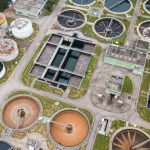
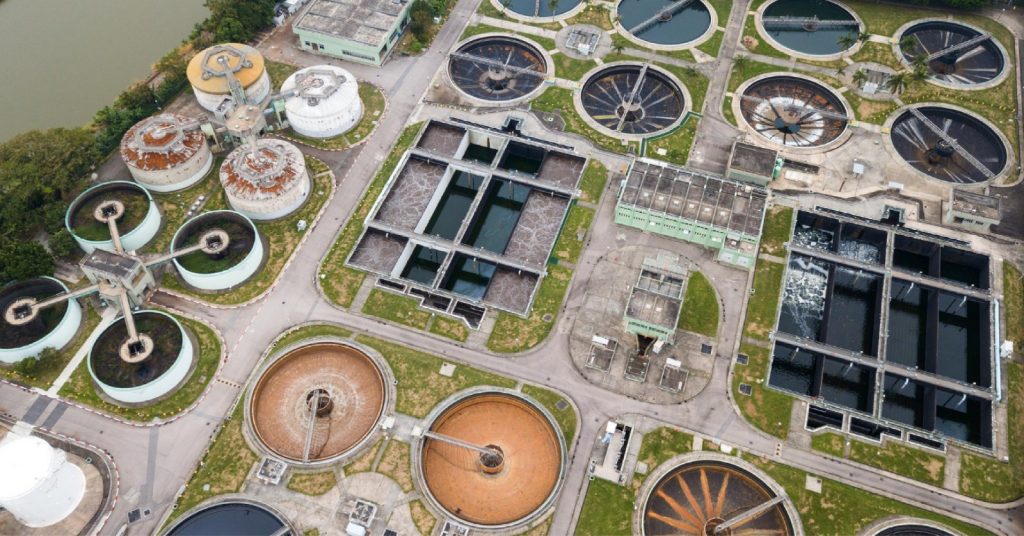
A sewage facility performs 3 main phases:
1) Primary Treatment:
Elimination of large solids and debris through sedimentation, grit removal, and screening (removal of total suspended solids)
2) Secondary Treatment:
Biological treatment using microbial organisms to degrade organic matter, such as B.O.D. and C.O.D. (includes techniques like activated sludge and aeration tanks)
3) Tertiary (Advanced) Treatment:
Additional purification (removal of dissolved solids, nutrients, and pathogens) utilizing filtration, disinfection, membranes, or reverse osmosis; result: effluent water that has been treated enough to be discharged back into waterways and reused by industry.
These phases provide industries with an effective method for complying with regulatory agencies and can also help with reusing their wastewater while improving efficiencies.
Types of Wastewater Treatment Plants for Industrial Use
- Effluent Treatment Plants
An ETP is engineered to treat toxic chemicals, oils, heavy metals, and complex contaminants resulting from industrial wastewater before being discharged back to the environment or reused by the industry. An ETP is used widely in the pharmaceutical, chemical, and textile industries.
- Sewage Treatment Plants
Sewage Treatment Plants are designed to treat wastewater generated from residential buildings, commercial buildings, industrial facilities, and other sources that include organic waste. The output from STPs is suitable for irrigation, flushing toilets, and other cooling applications.
- CETP
CETPs are designed to treat effluent generated from multiple users, primarily small and medium enterprises (SMEs), instead of having individual treatment systems for each facility. The collective use of a CETP provides an effective way to treat effluent economically and comply with applicable regulations.
- ZLD Systems
Zero liquid discharge systems are designed so that no treated or untreated liquid effluent is removed from a disposal facility. All treated wastewater is recovered and reused, while solids are disposed of safely. ZLD systems are best suited for operations located in arid areas or for industries with strict compliance requirements.
Key Technologies Used in Modern Wastewater Treatment Plants
Advanced Wastewater Management leverages advanced technologies and systems to improve efficiency and reuse.
- Membrane Bioreactor (MBR) Technology merges biological & mechanical treatment to produce very high-quality effluent through membrane filtration.
- Sequencing Batch Reactor (SBR) Technology is a batch-style treatment option that allows more flexibility with how wastewater is treated, as well as allows much greater efficiencies than traditional methods.
- Moving Bed Biofilm Reactor (MBBR) Technology incorporates biofilm carriers to improve biological treatment capabilities.
- Reverse Osmosis (RO) technology provides advanced treatment of dissolved salts, impurities, etc., for site reuse.
- Zero Liquid Discharge Systems integrate RO technology with evaporation technology and crystallisation technology to recover all water from waste streams.
These technologies are used in building custom wastewater treatment systems by Ion Exchange, a leading wastewater treatment company based in India, by integrating and optimising the biological, membrane, or filter technologies employed in each system.
Industries That Require a Wastewater Treatment Plant
- Pharmaceuticals produce complicated chemical effluent that requires advanced treatment.
- Textiles create dye-laden effluent that must be decolourised and treated chemically.
- Food and beverage industries produce organic-rich effluents that require biological treatment.
- Power plants need large volumes of water to be recycled for cooling.
- Chemical industries must deal with high-TDS and other hazardous effluents.
- Municipalities have to dispose of and/or reuse the sewage that is generated by the residences for environmental protection/prevention.
Benefits of Installing a Wastewater Treatment Plant
- Compliance with Regulations: Achieving Compliance with Central Pollution Control Board & State Pollution Control Board Regulations
- Cost Savings through a Water Recycling Plant Saving Fresh Water
- Sustainability Goals through ESG Goals & Lowering Some of Your Environmental Impact
- Resource Recovery through the Reuse of Treated Water in Your Operations
- Minimizing Pollution-Related Liabilities & Risk of Pollution.
How to Choose the Right Wastewater Treatment Plant for Your Facility?
Choosing a system has to do with:
- Daily Flow Rate: Amount of wastewater generated.
- Type of Effluent: Chemical composition and level of contamination in the effluent.
- Available Space: Size limitations for the plant installation.
- Compliance Requirements: Environmental regulations imposed by the local authorities.
- Need for ZLD: Is it required to achieve zero discharge?
- Reuse Goals: The quality of the treated water desired.
Wastewater shouldn’t just be treated—it should be leveraged. The right solution helps you stay compliant, cut costs, and reuse water efficiently.
At Ion Exchange, we design tailored systems—from ETPs to ZLD—that turn wastewater into value.
Connect with Ion Exchange today to build a smarter, more sustainable water strategy.