

Water quality requirements vary significantly across industries, municipalities, laboratories, and commercial facilities. Whether the goal is softening water, removing dissolved salts, producing demineralized water, or achieving ultra-pure process water, ion exchange technology remains one of the most reliable treatment methods available.
At the heart of this technology are two key resin categories: cation exchange resin and anion exchange resin. Understanding the differences between these ion exchange resin types is essential when selecting the right solution for your water treatment application.
This guide explains the role of cation and anion resins, how they work, their applications, and how to determine which resin is best suited for your treatment requirements.
Table of Contents
ToggleWhat Are Ion Exchange Resins?
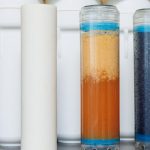
Ion exchange resins are specially manufactured polymer beads designed to remove unwanted dissolved ions from water and replace them with more desirable ions.
These resins are widely used in:
- Water softening
- Demineralization
- Industrial water treatment
- Boiler feed water treatment
- Pharmaceutical water systems
- Power plant applications
- Food and beverage processing
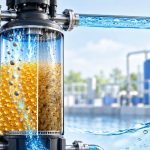
Modern ion exchange water treatment systems use different resin types depending on the contaminants that need to be removed.
Understanding Ion Exchange Water Treatment
Ion exchange works by exchanging dissolved ions present in water with ions attached to the resin surface.
For example:
- Calcium and magnesium can be exchanged for sodium.
- Chlorides and sulfates can be exchanged for hydroxide ions.
This process effectively removes dissolved impurities and improves water quality.
The two primary categories of water treatment resins are:
- Cation exchange resins
- Anion exchange resins
Each performs a distinct function in the treatment process.
What Is a Cation Exchange Resin?
A cation exchange resin removes positively charged ions (cations) from water.
Common cations include:
- Calcium (Ca²⁺)
- Magnesium (Mg²⁺)
- Sodium (Na⁺)
- Potassium (K⁺)
- Iron (Fe²⁺)
The resin exchanges these ions with hydrogen ions (H⁺) or sodium ions (Na⁺), depending on the application.
Common Applications of Cation Exchange Resin
- Water Softening
Removes hardness-causing calcium and magnesium.
- Demineralization Systems
Acts as the first stage in demineralization resin systems.
- Boiler Feed Water Treatment
Reduces scaling potential and improves boiler efficiency.
- Industrial Process Water
Protects equipment from hardness-related problems.
Types of Cation Exchange Resins
1. Strong Acid Cation (SAC) Resins
Strong acid cation resins operate effectively across a wide pH range.
Applications include:
- Water softening
- Demineralization
- Condensate polishing
- Industrial water treatment
2. Weak Acid Cation (WAC) Resins
Weak acid cation resins are typically used for:
- Alkalinity removal
- Partial demineralization
- Chemical consumption reduction
What Is an Anion Exchange Resin?
An anion exchange resin removes negatively charged ions (anions) from water.
Common anions include:
- Chlorides (Cl⁻)
- Sulfates (SO₄²⁻)
- Nitrates (NO₃⁻)
- Silica (SiO₂)
- Bicarbonates (HCO₃⁻)
The resin exchanges these ions with hydroxide ions (OH⁻).
When hydroxide combines with hydrogen ions released by cation resins, pure water is formed.
Common Applications of Anion Exchange Resin
- Demineralized Water Production
Removes dissolved anions following cation exchange treatment.
- High-Purity Water Systems
Used in pharmaceutical, electronics, and power industries.
- Nitrate Removal
Helps reduce nitrate levels in drinking water applications.
- Silica Removal
Essential for high-pressure boiler applications.
Types of Anion Exchange Resins
1. Strong Base Anion (SBA) Resins
Strong base anion resins remove:
- Chlorides
- Sulfates
- Silica
- Nitrates
They are commonly used in complete demineralization systems.
2. Weak Base Anion (WBA) Resins
Weak base resins primarily remove:
- Mineral acids
- Strong acid anions
They help reduce regeneration chemical consumption.
Cation vs Anion Exchange Resins: Key Differences
| Feature | Cation Exchange Resin | Anion Exchange Resin |
| Removes | Positive ions (cations) | Negative ions (anions) |
| Exchanges With | H⁺ or Na⁺ | OH⁻ |
| Removes Hardness | Yes | No |
| Removes Chlorides | No | Yes |
| Removes Sulfates | No | Yes |
| Removes Silica | No | Yes |
| Water Softening | Yes | No |
| Demineralization | First Stage | Second Stage |
Both resins are often used together in complete ion exchange water treatment systems.
Why Demineralization Requires Both Resins?
A demineralization resin system typically uses both cation and anion exchange resins.
Step 1: Cation Exchange
Removes dissolved positive ions and replaces them with hydrogen ions.
Step 2: Anion Exchange
Removes dissolved negative ions and replaces them with hydroxide ions.
Result
Hydrogen and hydroxide combine to form pure water.
This process produces demineralized water suitable for demanding industrial applications.
Which Resin Is Right for You?
The right resin depends on your water quality objectives.
Choose Cation Exchange Resin If:
You need:
- Water softening
- Hardness removal
- Boiler feed water treatment
- Scale prevention
Choose Anion Exchange Resin If:
You need:
- Chloride removal
- Sulfate removal
- Nitrate removal
- Silica reduction
Choose Both If:
You require:
- Demineralized water
- High-purity process water
- Pharmaceutical-grade water
- Power plant water treatment
Most advanced industrial systems utilize both resin types together.
Factors to Consider Before Selecting Water Treatment Resins
Before selecting ion exchange resin types, consider:
- Raw water quality
- Target water quality
- Flow rate requirements
- Regeneration requirements
- Operating costs
- Industry standards
- System design
A detailed water analysis is essential for determining the most effective resin configuration.
Applications Across Industries
Water treatment resins are widely used across multiple industries:
- Power Plants
For boiler feed water and condensate polishing.
- Pharmaceutical Industry
For purified water and process applications.
- Electronics Manufacturing
For ultra-pure water production.
- Food & Beverage Industry
For ingredient and process water treatment.
- Chemical Processing
For high-purity water requirements.
Ion Exchange Resin Solutions from Ion Exchange
As one of the leading providers of ion exchange technologies, Ion Exchange offers a comprehensive portfolio of water treatment resins for diverse industrial applications.
Its offerings include:
- Strong acid cation resins
- Weak acid cation resins
- Strong base anion resins
- Weak base anion resins
- Demineralization resin systems
- Specialty ion exchange resins
- High-purity water treatment solutions
These solutions help industries achieve reliable water quality while optimizing treatment performance and long-term operational efficiency.
Conclusion
Understanding the differences between cation vs anion exchange resins is essential for selecting the right water treatment solution. While cation exchange resins remove positively charged ions such as calcium and magnesium, anion exchange resins remove negatively charged ions such as chlorides, sulfates, and silica.
For applications requiring complete demineralization and high-purity water, both resin types work together as part of an integrated ion exchange water treatment system. By selecting the appropriate resin technology, industries can improve water quality, protect equipment, and achieve reliable operational performance.