

High-purity water is essential in industries where dissolved minerals can affect product quality, equipment efficiency, and process reliability.
A mixed-bed resin system removes both positively and negatively charged ions from water within a single vessel. It is commonly used as a final polishing stage after reverse osmosis or a demineralization plant to produce water with very low conductivity.
Understanding how mixed-bed resin works helps industries select the right solution for reliable water deionization and high-quality industrial water purification.
Table of Contents
ToggleWhat Is Mixed Bed Resin?
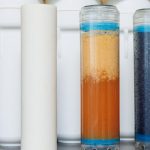
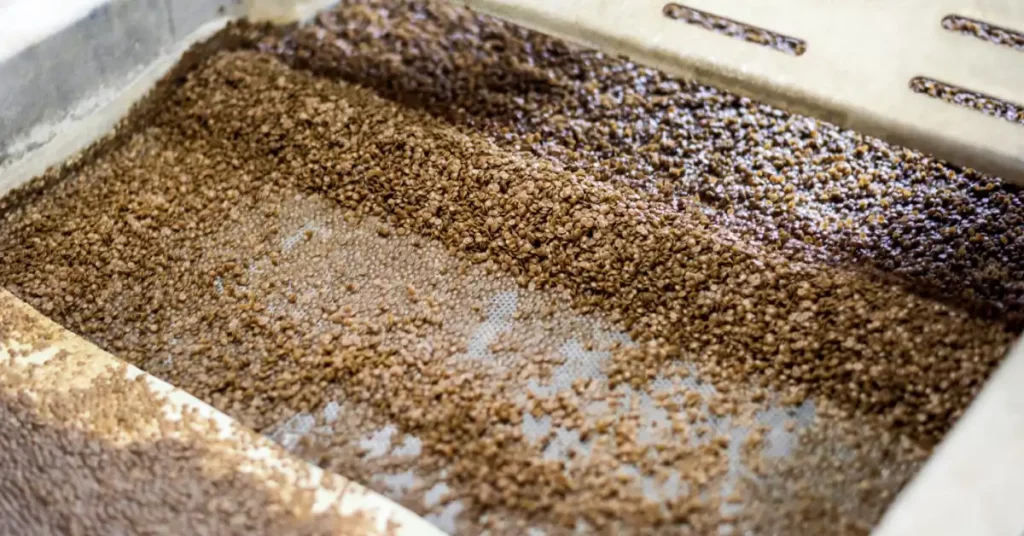
Mixed bed resin is a combination of:
- Strong acid cation exchange resin
- Strong base anion exchange resin
Both resin types are mixed inside one vessel.
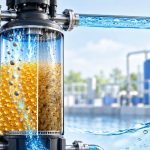
The cation resin removes positively charged ions such as calcium, magnesium, sodium, and iron. The anion resin removes negatively charged ions such as chloride, sulphate, nitrate, bicarbonate, and silica.
Because both resins are closely mixed, water repeatedly contacts cation and anion beads as it moves through the vessel.
How Does Mixed Bed Resin Work?
Dissolved salts separate into positive and negative ions when they enter water.
During treatment:
- The cation resin captures positive ions and releases hydrogen ions
- The anion resin captures negative ions and releases hydroxide ions
- Hydrogen and hydroxide combine to form water
This repeated ion exchange removes residual dissolved salts and produces highly purified water.
The process is especially effective because the mixed resin bed behaves like several cation and anion treatment stages working together.
Role of Mixed Bed Resin in Water Treatment
A mixed bed unit is generally installed after reverse osmosis or separate cation and anion exchange units.
The earlier treatment stages remove most dissolved salts. The mixed bed resin then removes the remaining trace ions that may affect water purity.
A typical treatment sequence may include:
- Pretreatment
- Reverse osmosis or demineralization
- Mixed bed polishing
- High-purity water storage
This arrangement reduces the ionic load on the mixed bed and extends the time between regenerations.
Mixed Bed Resin vs Separate-Bed Demineralization
| Parameter | Separate-Bed System | Mixed Bed System |
| Resin arrangement | Separate cation and anion vessels | Both resins in one vessel |
| Main purpose | Bulk ion removal | Final polishing |
| Water quality | Demineralized water | High-purity deionized water |
| Typical position | Main treatment stage | Final treatment stage |
| Regeneration | Simpler | Requires resin separation |
A mixed bed is therefore not usually used as the first treatment step for high-TDS water. It is mainly used to achieve the final level of purity.
Applications of Mixed Bed Resin
Mixed-bed resin is used in applications where even small amounts of dissolved ions may cause problems.
Common applications include:
- Boiler feed water
- Power plants
- Pharmaceutical manufacturing
- Chemical processing
- Electronics manufacturing
- Laboratories
- Food and beverage processing
- High-purity process water
In these applications, low conductivity and low silica levels help protect equipment and maintain product quality.
How Is Mixed Bed Resin Regenerated?
Over time, the resin becomes exhausted and must be regenerated.
The regeneration process includes:
- Backwashing to separate the cation and anion resins
- Acid regeneration of the cation resin
- Caustic regeneration of the anion resin
- Rinsing to remove excess chemicals
- Remixing the resins
- Final rinsing before returning the unit to service
Correct separation and remixing are important for maintaining treated-water quality.
Benefits of Mixed Bed Resin
Mixed bed resin provides several advantages:
- Produces very low-conductivity water
- Removes trace dissolved ions
- Reduces sodium and silica leakage
- Supports high-purity industrial processes
- Works effectively after RO or demineralization
- Provides consistent treated-water quality
Its compact design also allows both cation and anion exchange to take place in one vessel.
Factors That Affect Resin Performance
The performance of a water treatment resin depends on:
- Feed-water quality
- Dissolved salt concentration
- Suspended solids
- Organic contamination
- Chlorine exposure
- Flow rate
- Regeneration quality
- Resin mixing
Proper pretreatment is essential because suspended particles, chlorine, and organic matter can foul or damage the ion exchange resin.
INDION Mixed Bed Resins from Ion Exchange
Ion Exchange offers INDION ion exchange resins for demineralization, mixed-bed polishing, water softening, condensate polishing, and high-purity water applications.
The portfolio includes cation, anion, mixed bed, and speciality resin grades designed for different feed-water conditions and industrial requirements.
Ion Exchange also provides complete demineralization plants, mixed-bed units, reverse osmosis systems, pretreatment solutions, regeneration systems, and lifecycle services.
These integrated solutions help industries achieve reliable water deionization, low conductivity, and consistent treated-water quality across power, pharmaceutical, chemical, food and beverage, and manufacturing applications.
Conclusion
Mixed bed resin removes both positive and negative dissolved ions within a single vessel, producing high-purity deionized water.
It is commonly used after reverse osmosis or a demineralization plant to remove residual salts, reduce conductivity, and protect sensitive industrial processes.
The right resin selection, pretreatment, flow control, and regeneration process are essential for maintaining long-term performance.
Connect with Ion Exchange experts to select INDION mixed bed resins and complete industrial water purification systems designed for your water quality requirements.