

India generates more than 70 billion litres of wastewater every day, creating a significant need for effective treatment, recycling, and reuse.
For industries, wastewater treatment is no longer only about meeting discharge requirements. It is increasingly about recovering water, reducing environmental impact, controlling operating costs, and building more sustainable operations.
With over 58 years of expertise, Ion Exchange provides integrated STP and ETP plant solutions for industrial, municipal, commercial, and institutional applications. This guide explains the difference between STP and ETP plants, key treatment technologies, sustainability benefits, industry applications, and what to consider when selecting a manufacturer.
Table of Contents
ToggleWhat Are STP and ETP Plants? Key Differences Explained
Both STP and ETP systems treat wastewater, but they are designed for different wastewater sources.
| STP | ETP |
| Treats domestic sewage | Treats industrial effluent |
| Handles wastewater from homes, offices, hotels, institutions, and communities | Handles wastewater generated by industrial processes |
| Focuses mainly on organic matter, solids, and microorganisms | Addresses industry-specific chemicals, pollutants, solids, organic loads, and dissolved contaminants |
| Treated water can be reused for applications such as flushing, gardening, and utilities | Treated effluent can be discharged or further treated for industrial reuse |
How a Sewage Treatment Plant (STP) Works?
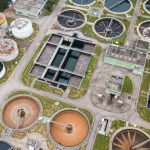
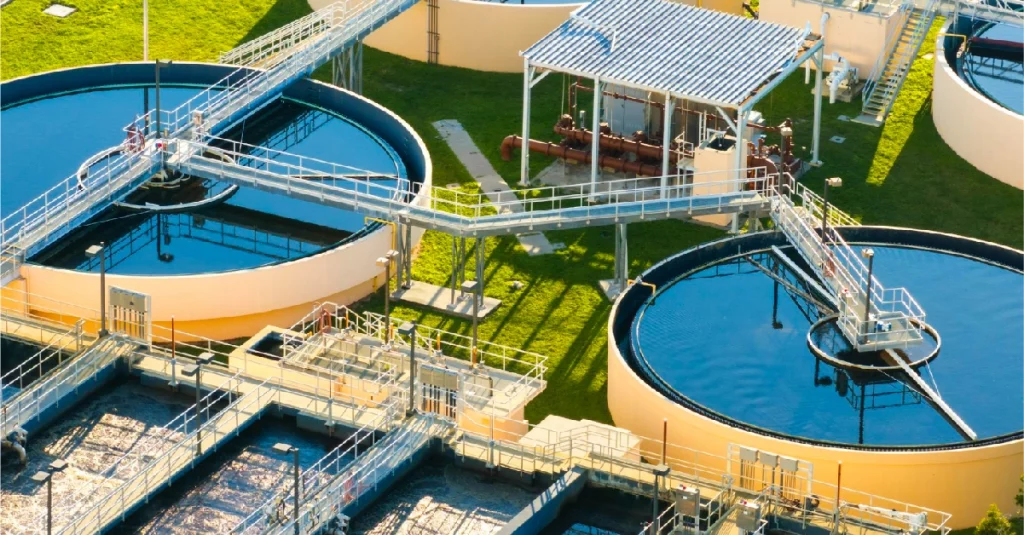
A Sewage Treatment Plant generally treats domestic sewage through a sequence of physical, biological, and tertiary treatment processes.
The process typically includes:
Screening → Primary treatment → Biological treatment → Clarification → Filtration → Disinfection → Reuse or discharge
Preliminary screening removes larger solids, while primary treatment separates settleable matter. Biological treatment then reduces organic pollutants using processes such as activated sludge, MBBR, or SBR.
Tertiary filtration and disinfection can provide additional treatment where higher-quality water is required for reuse.
How an Effluent Treatment Plant (ETP) Works?
An Effluent Treatment Plant is designed around the specific characteristics of industrial wastewater.
A typical process may include:
Equalisation → Neutralisation → Coagulation & flocculation → Biological treatment → Advanced treatment → Reuse or discharge
Equalisation helps manage variations in wastewater flow and quality. Chemical treatment can improve the removal of suspended solids, colour, oils, metals, and other contaminants, while biological treatment reduces biodegradable organic matter.
Advanced treatment such as membrane filtration, RO, or ZLD may be added where higher water recovery or stringent discharge requirements apply.
The treatment process must be customised according to the industry. Textile effluent, pharmaceutical wastewater, food-processing effluent, and chemical wastewater can have very different treatment requirements.
Why Sustainable Wastewater Treatment Matters Today?
Sustainable wastewater treatment is increasingly becoming a business requirement rather than simply a compliance activity.
Effective treatment can help industries:
- Reduce freshwater consumption
- Reuse treated wastewater
- Lower pollution risks
- Improve resource efficiency
- Support ESG objectives
- Meet applicable discharge requirements
For facilities operating under stringent discharge requirements or with limited freshwater availability, technologies such as water recycling and Zero Liquid Discharge (ZLD) can further increase water recovery.
The focus is shifting from simply treating wastewater to managing the entire water cycle — from water intake and process use to wastewater treatment, recovery, and reuse.
Industries That Rely on STP & ETP Plants
Different industries generate wastewater with different characteristics, making application-specific treatment important.
- Textiles
Textile and dyeing operations can generate colour-, chemical-, and organic-rich wastewater requiring chemical, biological, and advanced treatment.
- Pharmaceuticals
Pharmaceutical manufacturing can generate complex effluent containing chemicals and high organic loads, requiring carefully designed treatment systems.
- Chemicals
Chemical industries may generate wastewater with variable pH, high TDS, toxic compounds, and other process-specific contaminants.
- Food & Beverage
Food-processing wastewater is often rich in biodegradable organic matter, fats, oils, and suspended solids, making biological treatment an important part of the treatment process.
- Automotive
Automotive manufacturing generates wastewater from multiple process stages. Integrated water and wastewater management can support recycling and reduce freshwater consumption.
Ion Exchange has delivered water, wastewater, ZLD, and STP solutions for automotive manufacturing, including a project for Kia Motors that integrated water treatment, ZLD, and sewage treatment to support water recycling across the manufacturing lifecycle.
- Power
Power plants require large volumes of water for utilities and cooling. Wastewater treatment and recycling help recover water and improve resource efficiency.
- Real Estate and Hospitality
Residential developments, hotels, commercial buildings, and institutions generate domestic sewage requiring reliable STP systems. Treated water can be reused for applications such as landscaping and flushing.
Key Technologies in Modern STP & ETP Plants
The technology selected for an STP or ETP should be based on wastewater characteristics, treatment objectives, available space, and reuse requirements.
- MBBR
Moving Bed Biofilm Reactor (MBBR) uses biofilm carriers to support biological treatment and can provide compact treatment for varying wastewater loads.
- SBR
Sequencing Batch Reactor (SBR) performs biological treatment and settling in a batch-based process. It provides flexibility and can be automated for consistent operation.
- MBR
Membrane Bioreactor (MBR) combines biological treatment with membrane filtration to produce high-quality treated water. It is particularly useful where treated-water reuse and a compact footprint are priorities.
- DAF
Dissolved Air Flotation (DAF) helps separate suspended solids, oils, grease, and other floatable contaminants from wastewater.
- ZLD
Zero Liquid Discharge (ZLD) systems are designed to maximise water recovery and eliminate liquid effluent discharge. They can integrate membrane treatment, evaporation, and crystallisation technologies.
Ion Exchange’s documented wastewater treatment portfolio includes MBR, SBR, MBBR, RO, and ZLD technologies for developing customised treatment systems.
Energy-Efficient Wastewater Treatment Technologies
Energy consumption is an important consideration when designing a modern energy-efficient wastewater treatment plant.
Efficient aeration, appropriate pumping systems, automation, process optimisation, and smart monitoring can help reduce unnecessary energy use.
Automation and SCADA-based monitoring can also provide greater visibility into plant performance, helping operators identify deviations and optimise treatment processes.
The objective is not simply to reduce power consumption, but to achieve the required treatment quality with an efficient combination of energy, chemicals, equipment, and process control.
Water Recycling and Reuse Systems for Industry
Treated wastewater can often be recovered for suitable non-potable applications instead of being discharged.
Depending on the required quality, recycled water can be used for:
- Cooling towers
- Gardening and landscaping
- Toilet flushing
- Cleaning
- Process applications
- Utility requirements
Ion Exchange’s wastewater solutions include treated-effluent reuse and membrane recycling, with documented applications involving RO, ultrafiltration, and treated-effluent recovery.
The potential water savings depend on the site’s wastewater characteristics, treatment configuration, recovery target, and reuse demand. Therefore, reuse potential should be established through a site-specific water balance rather than applying a universal percentage.
What to Look for in an STP & ETP Plant Manufacturer?
Choosing an STP & ETP Plant Manufacturer requires evaluating more than the equipment supplied.
First, consider experience and technical expertise. A manufacturer should understand the treatment challenges associated with different industries and wastewater streams.
Next, evaluate the range of technologies offered. Access to biological, chemical, membrane, filtration, recycling, and ZLD technologies allows the treatment process to be customised instead of forcing every application into the same configuration.
Industry-specific design capability is equally important. Textile wastewater, pharmaceutical effluent, food-processing wastewater, and chemical effluent require different treatment strategies.
A reliable manufacturer should also provide end-to-end engineering and project execution, including process design, equipment integration, installation, commissioning, automation, and performance support.
Finally, consider operation and maintenance capability. Preventive maintenance, technical support, spare parts, process optimisation, and AMC/O&M services can have a significant impact on long-term plant performance.
Ion Exchange Global — 60 Years of Water Treatment Leadership
Ion Exchange has been working in water and wastewater treatment since its establishment in 1964. Its R&D and Technology Centres have been associated with DSIR recognition since the company’s early development, and the company has built capabilities across water treatment, wastewater management, recycling, and environmental solutions.
Today, Ion Exchange provides technologies, products, engineering, and lifecycle services for industries, institutions, municipalities, communities, and homes. Its portfolio covers water treatment, wastewater treatment, water recycling and reuse, process technologies, specialty chemicals, and services.
Its wastewater treatment capabilities include STP, ETP, MBR, SBR, MBBR, RO, membrane recycling, and ZLD solutions, allowing systems to be configured according to specific wastewater and water-reuse requirements.
Ion Exchange also provides lifecycle models including O&M, AMC, BOO, BOOT, and rental arrangements, depending on the project and customer requirements.
This combination of technology, engineering, products, and lifecycle support makes Ion Exchange a suitable partner for organisations looking beyond basic wastewater treatment towards integrated sustainable industrial water management.
The Future of Sustainable Industrial Water Management
The future of wastewater management is moving towards greater water recovery, automation, monitoring, and resource efficiency.
Digital monitoring and SCADA systems can improve visibility into treatment performance, while advanced membranes and ZLD technologies can increase opportunities for water recovery.
At the same time, regulatory expectations and sustainability goals are encouraging industries to look beyond discharge compliance and consider the complete water cycle.
For industrial operators, investing in an STP or ETP is therefore increasingly a long-term water management decision rather than simply an environmental compliance expense.
Conclusion
A sustainable wastewater strategy requires more than installing an STP or ETP. It requires the right technology, application-specific design, efficient operation, compliance management, and opportunities for water recovery and reuse.
Choosing an experienced STP & ETP Plant Manufacturer can help industries build reliable treatment infrastructure that supports both operational and environmental goals.
Connect with Ion Exchange experts for a plant design assessment, wastewater treatment consultation, or site evaluation tailored to your water management requirements.