
Overview
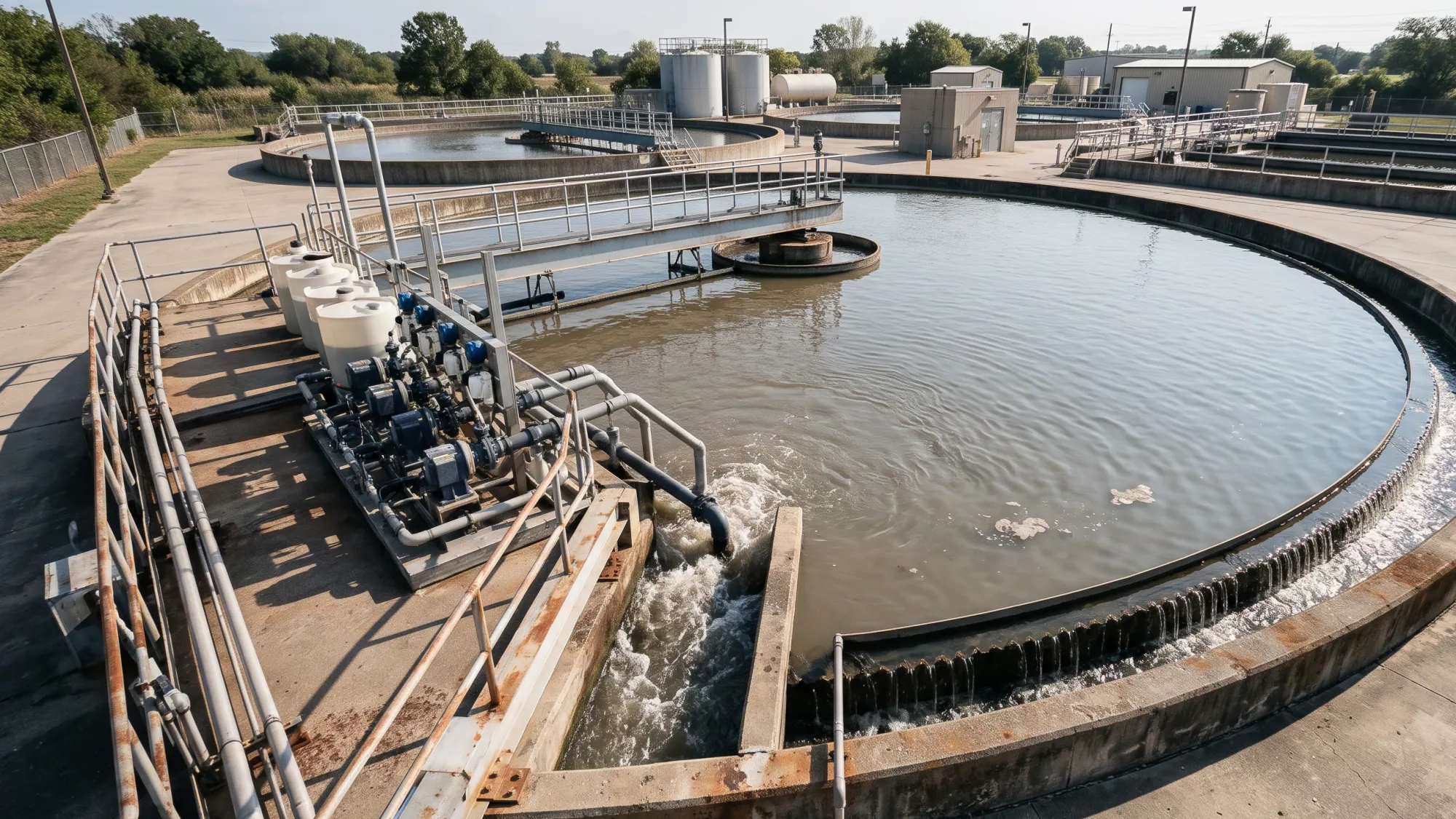
INDION coagulants and flocculants help separate suspended solids, colloids and colour bodies from water and process streams. INDFLOC products include inorganic coagulants and water-soluble polymer flocculants in cationic, anionic and non-ionic grades. INDFOAM products control unwanted foam in water treatment and selected industrial processes.
These products are used in raw-water clarification, effluent treatment, textile colour removal, de-oiling, sludge thickening and dewatering, and paper and sugar processes. The product and dose are selected for the feed characteristics and the separation equipment.
 Speciality Chemical Treatment Programmes for Water and Process ApplicationsPDFDownload
Applications
Raw-water clarification
Removal of turbidity and suspended solids ahead of downstream treatment.
Effluent treatment
Colour removal, solids separation and tertiary clarification.
Oil-water and sludge separation
De-oiling, sludge thickening and dewatering.
Process systems
Foam control and selected paper, sugar and textile applications.
Process use and chemical role
Where the chemicals are used
| Process stage or system | Chemical or operational role |
|---|---|
| Raw-water clarification | Coagulants and flocculants support removal of turbidity and suspended solids before downstream treatment. |
| Colour removal in effluent | An inorganic coagulant is applied in primary treatment to precipitate colour. A flocculant then helps settle the precipitated colour and flocs. Additional grades are used in tertiary treatment where further colour reduction is required. |
| Biological treatment and process foam | A defoamer may be used in an ETP biological system or another process location when foam is affecting operation. Defoamer selection depends on the process and compatibility requirements. |
| Oil-water separation and sludge handling | Coagulants and flocculants are selected for de-oiling and sludge dewatering according to the water profile and separation objective. |
Typical treatment sequence
Screening removes large solids. Primary coagulation and flocculation support settling or flotation. Biological treatment follows where required. Tertiary chemistry is selected for residual colour or suspended solids. Defoamer is added only where foam control is needed.
- 01
Screening
Removes large solids
- 02
Primary coagulation and flocculation
Supports settling or flotation
- 03
Biological treatment
Follows where required
- 04
Tertiary treatment
Residual colour or suspended solids
Benefits and intended outcomes
OUTCOME 1
Coagulants destabilize fine suspended or coloured material; flocculants help form aggregates that can be settled, floated or filtered.
OUTCOME 2
The programme may support colour reduction, clarification, oil-water separation and sludge handling when selected for the stream and separation equipment.
OUTCOME 3
Defoamers address unwanted foam where it affects treatment or process operation; selection depends on compatibility and process conditions.
Product range and examples
INDFLOC 100L
Inorganic colour-removal coagulant used in primary treatment.
INDFLOC 856M and INDFLOC 847M
Used in primary treatment of coloured wastewater; INDFLOC 856M is also listed for lignin colour removal.
INDFLOC 443HM
High-molecular-weight flocculant used to settle precipitated colour and flocs.
INDFLOC 857M, 858M and 859M
Listed for tertiary wastewater treatment; 858M and 859M are identified for advanced-chemistry applications.
INDFOAM 1502
Listed for foam control in a biological system.
Selection and implementation
SYSTEM-SPECIFIC SELECTION
Choose the product and dose for the feed characteristics, pH, solids and colour load, treatment sequence and separation equipment. Laboratory or plant testing can help confirm the programme.
FAQs
What is the difference between a coagulant and a flocculant?
A coagulant helps destabilize fine suspended or coloured material; a flocculant helps form larger aggregates that can be settled, floated or filtered.
Can one product treat every wastewater?
No. Product selection depends on the wastewater, pH, solids and colour load, treatment sequence and separation equipment. Laboratory or plant testing can help confirm the programme.
How is dosage set?
Dosage is determined from the feed characteristics, treatment target and product selection. The brochure does not provide a universal dosage.
Request a technical review
Request a treatment review or product recommendation for your water or process stream.
+91-22-6610-0678+91-22-6231-2000+91-22-6231-20429:00 AM to 6:00 PM INDIA IST