Conventional
Solar evaporation
- 12 to 18 monthsLonger production time
- ~40 to 45%Lower lithium yield
- Larger footprintExtensive pond area
- No water recyclingWater is lost to evaporation
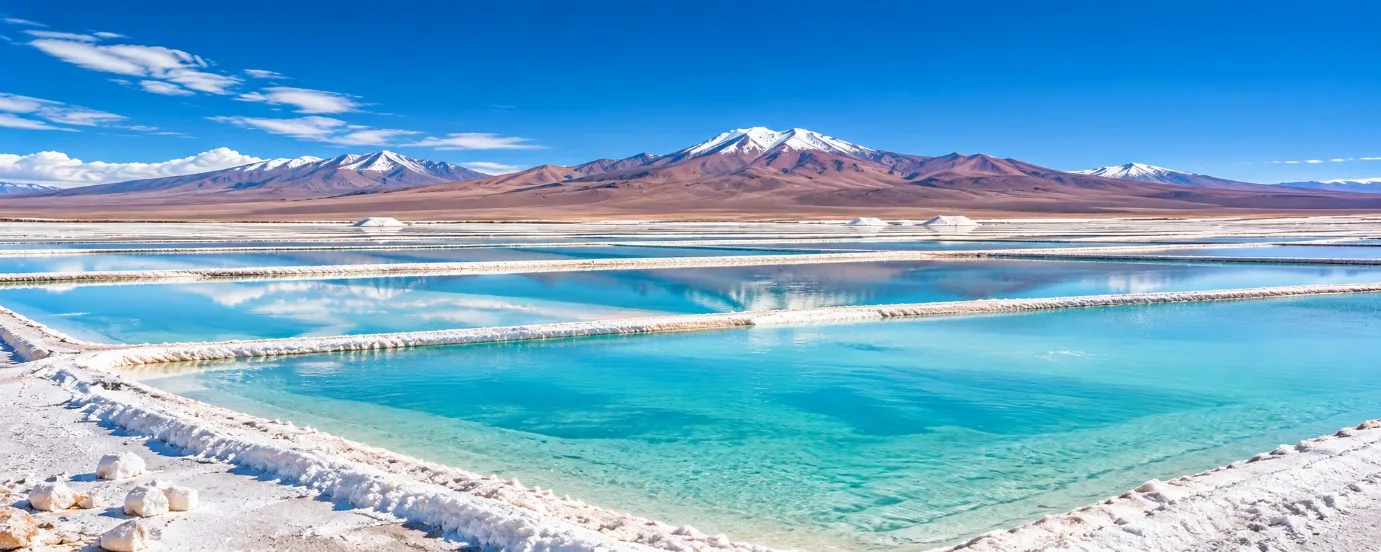
Lithium salar brine evaporation ponds, South America
The growing adoption of electric vehicles, energy storage systems, and renewable energy technologies is driving global demand for lithium. Lithium is sourced from various resources, including salar brines, hard-rock pegmatites, geothermal brines, oil and gas (O&G) produced water, and recycled batteries, each requiring different extraction and processing approaches depending on its composition and lithium concentration. Many lithium brine resources are located in water-stressed regions, particularly in South America, making water recovery, recycling, and reuse critical priorities. Long production times, high operating costs, complex brine chemistry, and climate-dependent solar evaporation create additional challenges for lithium producers. These factors are increasing the need for efficient separation technologies that improve lithium recovery, reduce processing time and costs, and support sustainable water and resource management.
Conventional
Direct lithium extraction
Typical values for each approach; actual performance depends on the brine and project.
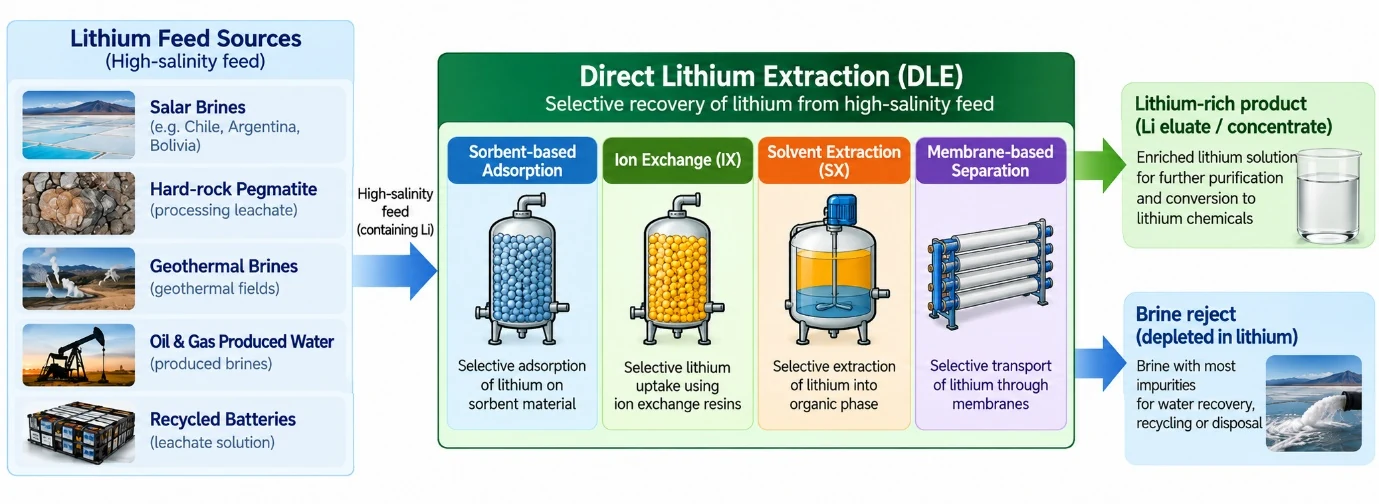
Direct Lithium Extraction (DLE) is a key technology in lithium production, enabling the selective recovery of lithium from high-salinity feeds while rejecting most impurities. It is applied to diverse lithium resources, including salar brines, geothermal brines, oil and gas produced water, and hard-rock processing streams. The main DLE technologies include sorbent-based adsorption, ion exchange (IX), solvent extraction (SX), and membrane-based separation. These technologies aim to improve lithium recovery, enhance process efficiency, reduce processing time and costs, and support more sustainable lithium production.
TRL 9
Sorbent preferentially captures Li over Na, K, Mg, Ca, and other ions.
Watch points: sorbent capacity and lifetime; sensitivity to brine chemistry; some sorbents require elevated temperature; impurity competition.
TRL 6 to 8
Li⁺ is exchanged with H⁺ or other ions on a functionalized resin or material.
Watch points: acid and base regeneration; chemical consumption; resin degradation and fouling; waste and neutralization; Mg and Ca competition.
TRL 5 to 8
Li is transferred between aqueous and organic phases using an extractant.
Watch points: organic solvent and extractant handling; solvent losses; toxicity, fire and environmental concerns; phase separation; impurities affecting the chemistry.
TRL 4 to 6
Selective ion transport and separation through a membrane (NF, ED, BPM, ion-selective membranes and others).
Watch points: Li⁺/Na⁺ selectivity is difficult; concentration polarization and fouling; membrane stability; energy can be high for electrically driven systems; full DLE integration is still immature.
TRL: technology readiness level, as an industry-wide indication.
Ion Exchange (India) Ltd.
At Ion Exchange (India) Limited, we are developing innovative solutions to support the growing lithium industry through integrated process solutions tailored to different lithium brine sources and customer requirements. Our in-house developed products such as HYDRAMEM® UF, NF, and RO membranes, together with INDION® ion exchange resins and thermal processing technologies, can offer solutions to address key process challenges across diverse lithium resources. Through application development and process integration, Ion Exchange aims to help lithium producers optimize separation processes, improve water recovery, reduce freshwater consumption, and manage concentrated residual streams more effectively.
Performance in each application is confirmed through testing, validation and pilot-scale data.
Stage 01
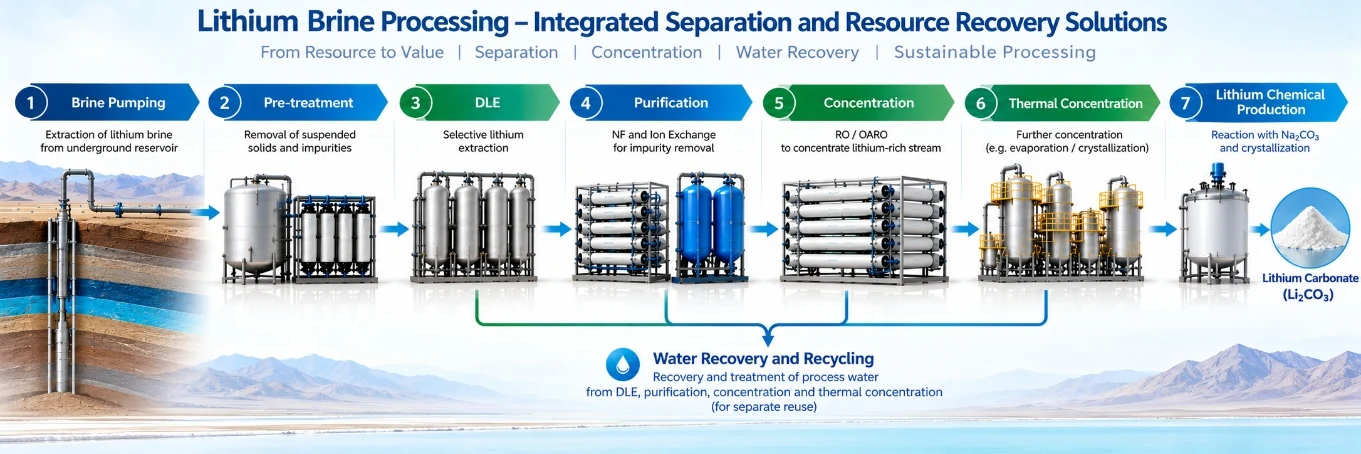
High-salinity brine is extracted from underground aquifers through strategically designed pumping wells. The brine is transferred to the processing plant for treatment and lithium recovery, with well operation managed to support sustainable aquifer use.
Stage 02
The extracted brine undergoes pre-treatment to remove suspended solids, colloidal matter, and other contaminants that affect downstream process performance. Depending on brine characteristics, appropriate chemical and filtration treatments are applied to protect equipment and ensure reliable operation.
Stage 03
Lithium is selectively extracted from the brine using adsorption, ion exchange, solvent extraction, or membrane-based technologies. DLE reduces dependence on conventional solar evaporation ponds, shortens processing time, and achieves high lithium recovery, depending on the technology and brine chemistry.
Stage 04
The lithium-rich solution is treated to remove impurities such as calcium, magnesium, boron, sulfate, and other interfering ions. Technologies such as nanofiltration (NF), ion exchange, chemical precipitation, and selective separation processes may be integrated to achieve the required solution purity.
Stage 05
The purified lithium-rich stream is concentrated using reverse osmosis (RO)-based membrane technologies to remove water and increase lithium concentration. This reduces the load on downstream thermal systems, improves energy efficiency, and optimizes the overall process.
Stage 06
Thermal technologies, including evaporation and crystallization, are used for further concentration and, where required, recovery of dissolved salts. This stage prepares the lithium-rich solution for downstream chemical conversion while enabling recovery of water as condensate for potential reuse.
Stage 07
The concentrated and purified lithium solution undergoes chemical conversion and crystallization to produce lithium carbonate (Li₂CO₃) or, depending on the process route, lithium hydroxide (LiOH). Further purification and quality control are applied to meet the stringent specifications required for battery-grade lithium chemicals. The mother liquor generated during the chemical precipitation step is recycled upstream of the DLE process to recover residual lithium and water.
Across stages 03 to 06
Water is recovered from suitable process streams generated during DLE, purification, membrane concentration, and thermal processing using membrane and thermal technologies. Recovered water is treated for reuse within the plant, helping reduce freshwater consumption, minimize wastewater generation, and support sustainable lithium production.
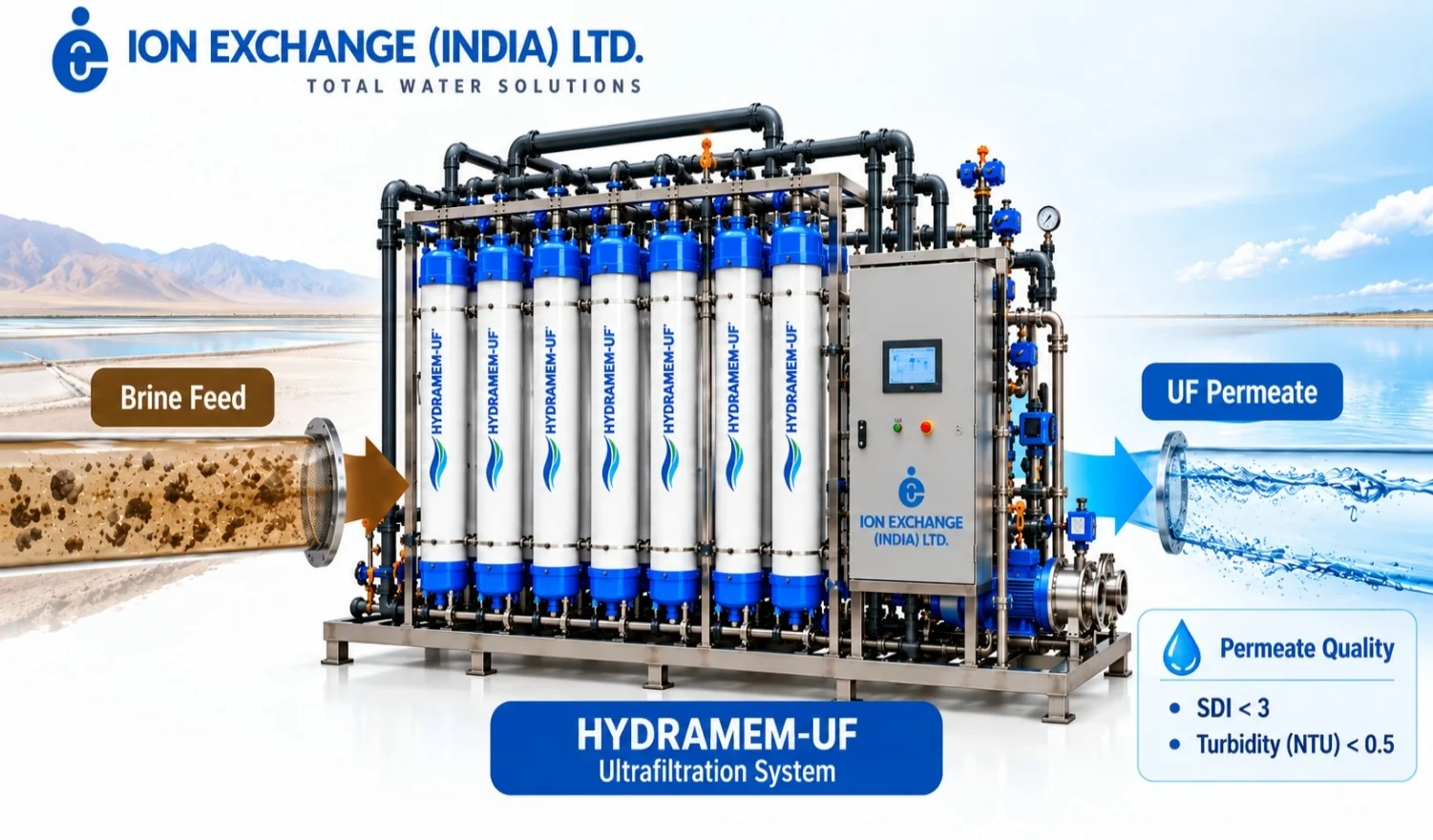
Ultrafiltration to remove suspended solids and protect downstream membranes and resins.
Explore membranes →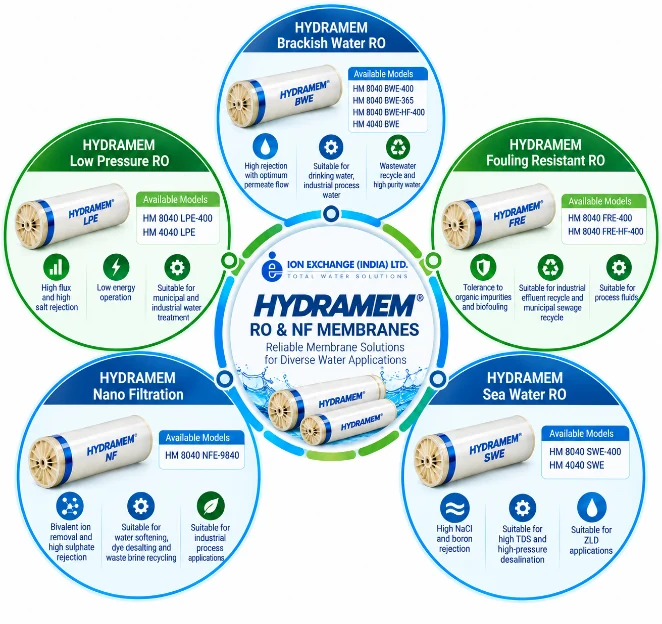
Purification and concentration of brine streams, with water recovery and recycling.
Explore membranes →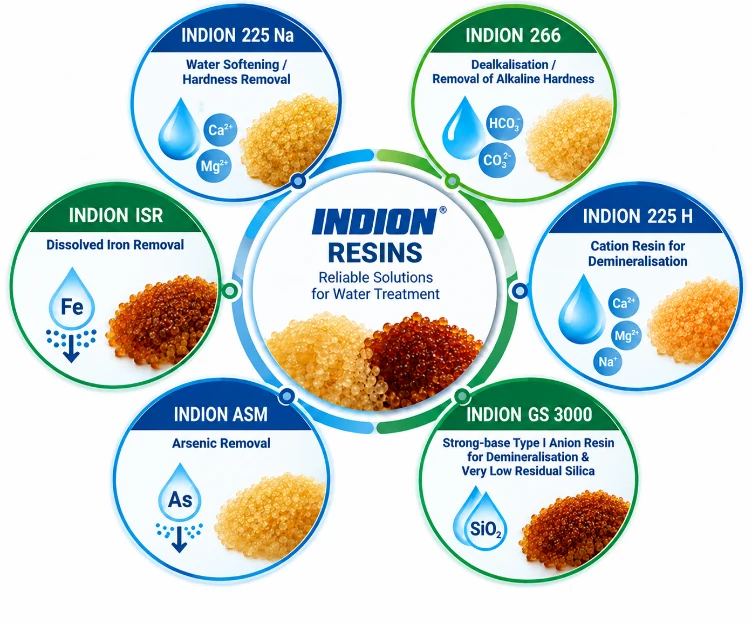
Removal of hardness and impurities such as boron and silica (Ca, Mg, Si, B, Fe, As).
Explore ion exchange resins →Concentration
Current offerings and future developments are shown separately on this page, and not every process stage is offered in-house.
Focus
DLE-based technologies development through in-house R&D and strategic partnerships to cater to diverse lithium sources and meet customer requirements.
The company focuses on delivering integrated flowsheet-based solutions for efficient lithium recovery and the production of battery-grade lithium carbonate (Li₂CO₃).
Collaboration
The company also provides total water management solutions and is open to R&D collaborations and pilot-scale testing to address diverse requirements across the lithium value chain, including:
By leveraging appropriate technologies, Ion Exchange supports efficient water utilization, minimizes freshwater consumption and wastewater generation, and promotes sustainable mining practices while protecting the environment.