
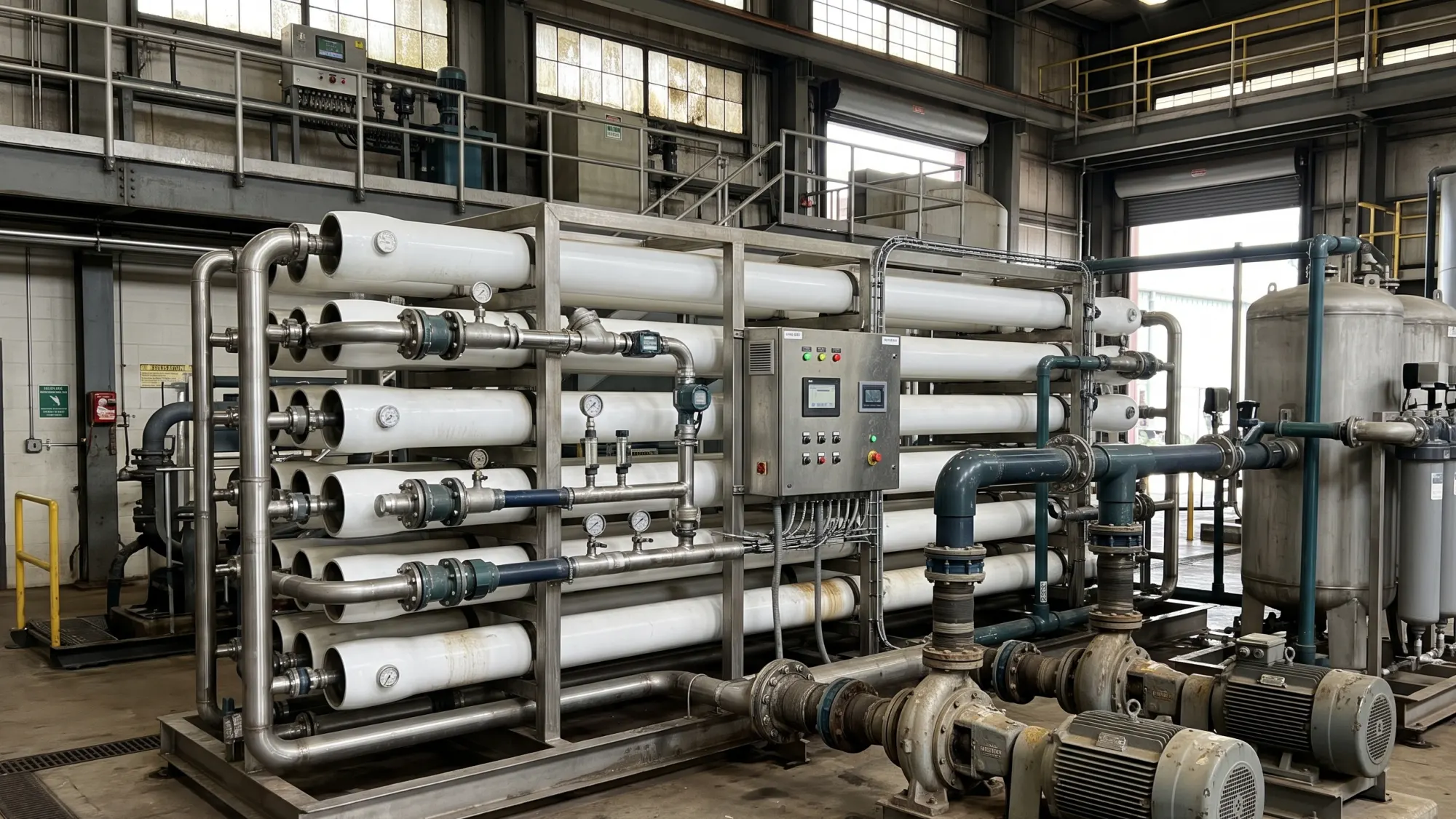
Overview
INDION antiscalants help control mineral scale formation in membrane systems. Membrane cleaning chemicals are used in cleaning-in-place (CIP) programmes to address fouling and restore membrane performance. Product selection depends on feed-water chemistry, membrane type, recovery and operating conditions.
Related chemistry can also support desalination and multiple-effect or mechanical-vapour-recompression evaporator systems.
 Speciality Chemical Treatment Programmes for Water and Process ApplicationsPDFDownload
Applications
RO and desalination
Antiscalant programmes for feed-water scale risk in membrane systems.
NF and UF systems
Selected antiscalant and cleaning applications, subject to membrane compatibility.
Membrane cleaning in place
Acidic or alkaline cleaners selected for the identified foulant.
MEE and MVR evaporators
Antiscalant and antifoam chemistry listed in the corporate portfolio.
Process use and chemical role
Where each chemistry is used
| Process stage or system | Chemical or operational role |
|---|---|
| RO, NF and UF feed | The selected antiscalant is dosed into the membrane-system feed before the membrane elements, at a point defined by the plant design. The programme is selected against the scale risk and required recovery. |
| Membrane cleaning in CIP | Acidic or alkaline cleaners are selected for the foulant identified and circulated through the membrane cleaning loop according to the membrane and equipment procedures. |
| MEE and MVR evaporators | The corporate portfolio lists antiscalants and antifoam or defoamer chemistry for evaporator stability. |
- 01
Membrane-system feed
RO, NF and UF feed
- 02
Antiscalant addition
Before the membrane elements
- 03
Membrane elements
RO, NF or UF
CIP cleaning loop
Separate loop, run to the membrane and equipment procedures
Benefits and intended outcomes
OUTCOME 1
Antiscalants help control mineral scale formation under the selected operating conditions.
OUTCOME 2
CIP cleaners address fouling when cleaning is required under plant and membrane-supplier procedures.
OUTCOME 3
Product selection does not establish a universal recovery, cleaning interval or performance guarantee.
Product range and examples
Membrane antiscalants
Selected for feed chemistry, membrane type and operating recovery.
CIP cleaners
Acidic and alkaline cleaning products selected for the identified foulant and membrane compatibility.
Related products
The corporate portfolio also lists preservatives and sanitizers for membrane systems, plus MEE antiscalants and antifoams.
Selection and implementation
SYSTEM-SPECIFIC SELECTION
Review feed-water analysis, membrane type, recovery, operating data and likely foulant before selecting an antiscalant or cleaner. Follow the membrane supplier and plant procedures for cleaning.
FAQs
How is an RO antiscalant selected?
Selection uses feed-water analysis, membrane type, recovery and operating conditions.
When should a membrane be cleaned?
Use the plant’s operating and cleaning criteria, membrane supplier guidance and site procedures to determine when cleaning is required.
Are the chemicals supplied in standard packages?
The current webpage lists 30 kg, 50 kg and 200 kg HDPE drums or carboys, which are the domestic pack sizes. International dispatches also use 25 kg, 200 kg HDPE drums and 1000 kg IBC totes. Confirm the current packaging and pack size for the selected product and destination.
Request a technical review
Share the feed analysis, membrane details and operating data for a product review.
+91-22-6610-0678+91-22-6231-2000+91-22-6231-20429:00 AM to 6:00 PM INDIA IST