Sewage from residential buildings, commercial facilities, institutions, and communities contains suspended solids, organic matter, nutrients, microorganisms, and other contaminants. If released without adequate treatment, it can affect water resources and the surrounding environment.
A sewage treatment plant (STP) is designed to treat this wastewater and reduce contaminants before the treated water is discharged or reused. Understanding how a sewage treatment plant works helps explain the role of each treatment stage and why different STP technologies are used.
What Is a Sewage Treatment Plant?
A sewage treatment plant is a system that treats domestic or municipal sewage through a combination of physical, biological, and, where required, chemical and disinfection processes.
The objective is to reduce pollutants and produce treated water suitable for its intended discharge or reuse application.
A typical STP plant may follow:
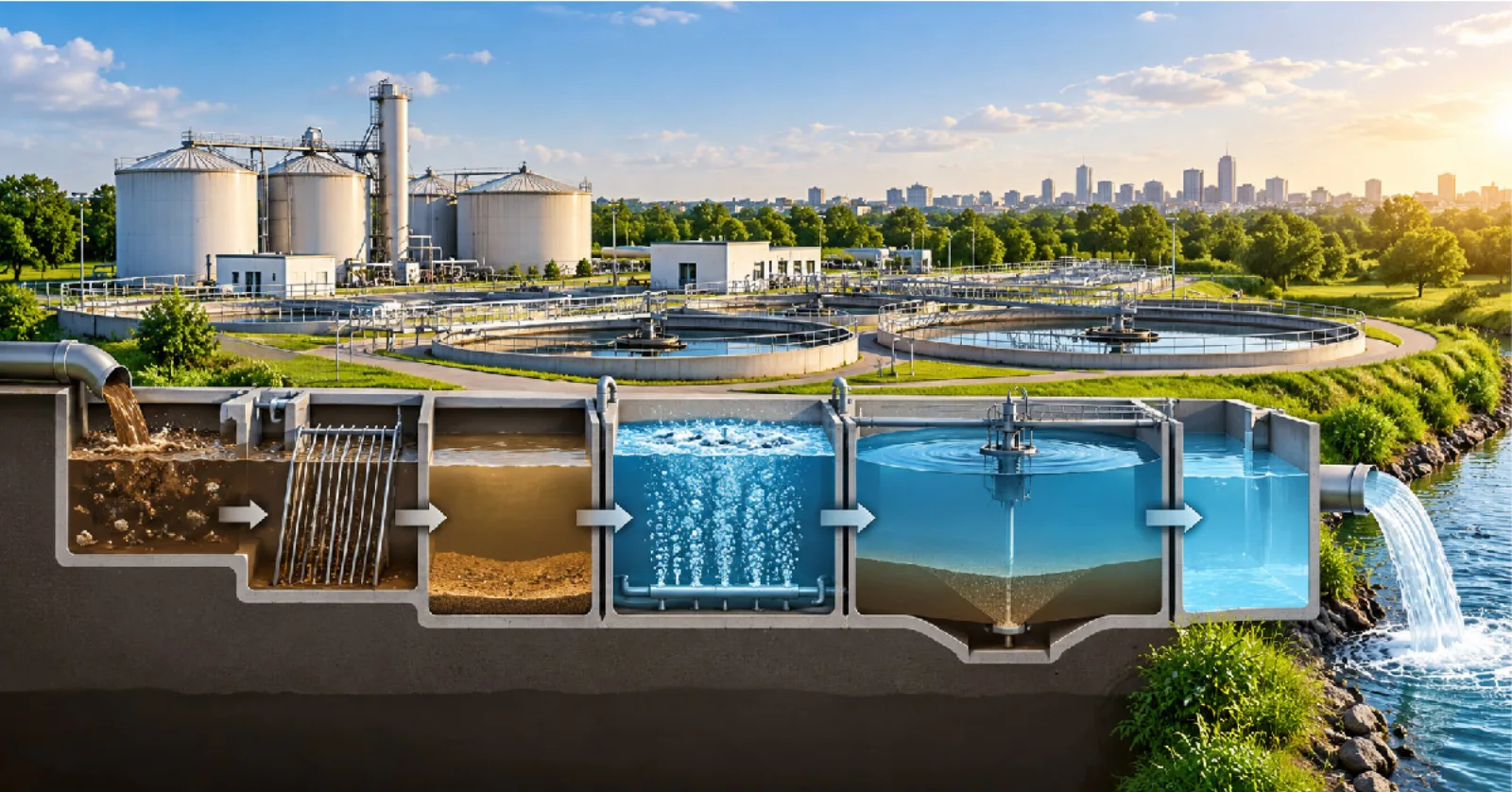
Screening → Grit Removal → Primary Treatment → Biological Treatment → Clarification → Tertiary Treatment → Disinfection
The exact configuration depends on sewage characteristics, treatment capacity, required treated-water quality, and the intended application.
How Does a Sewage Treatment Plant Work?
The sewage treatment plant process consists of several stages, with each stage addressing a different type of contaminant.
Step 1: Screening
Sewage first passes through screens that remove larger materials such as:
- Plastics
- Paper
- Cloth
- Leaves
- Other debris
Screening protects pumps and downstream treatment equipment from blockage and damage.
Step 2: Grit Removal
Grit chambers or similar systems remove heavier inorganic particles such as sand, grit, and small stones.
This reduces abrasion and accumulation within pumps, tanks, and pipelines.
Step 3: Primary Treatment
During primary treatment, sewage enters settling tanks or clarifiers.
Suspended solids settle to form primary sludge, while lighter materials can be separated from the surface.
This reduces the solids and organic load entering biological treatment.
Biological Treatment in an STP
Biological treatment is a key part of modern sewage treatment.
Microorganisms break down biodegradable organic matter present in sewage.
Different technologies can be selected depending on plant requirements.
Activated Sludge
Activated sludge uses microorganisms suspended in wastewater to reduce biodegradable organic pollutants.
MBBR
Moving Bed Biofilm Reactor technology uses carrier media that provide a surface for microbial growth and biological treatment.
SBR
Sequencing Batch Reactor technology carries out different treatment stages in the same reactor through controlled cycles.
MBR
Membrane Bioreactor technology combines biological treatment with membrane filtration. It can produce high-quality treated effluent where additional purification or reuse is required.
Secondary Clarification
After biological treatment, the wastewater is separated from the biological solids.
In conventional biological systems, secondary clarifiers allow the biomass to settle. A portion of the settled biomass can be returned to the biological reactor, while excess sludge is removed for further treatment.
This produces a clearer treated-water stream for downstream treatment or disinfection.
Tertiary Treatment and Disinfection
Additional treatment may be required when the treated water needs to meet higher-quality requirements, particularly for reuse.
Tertiary processes can include:
- Sand filtration
- Multimedia filtration
- Activated carbon
- Ultrafiltration
- Reverse osmosis
Disinfection can then be used to control microorganisms.
Common options include chlorination, ultraviolet treatment, and ozonation.
The treatment configuration should be selected according to the required final water quality.
What Happens to Sludge in an STP?
Sludge is generated as solids are separated during sewage treatment.
Sludge management can include:
Thickening → Dewatering → Handling → Disposal or Further Processing
Dewatering reduces the water content of sludge and makes it easier to handle and transport.
Depending on the system and sludge characteristics, further processing or resource-recovery options may also be considered.
Why Is a Sewage Treatment Plant Important?
Protects Water Resources
Treatment reduces the amount of untreated sewage and pollutants entering water bodies.
Supports Public Health
Effective treatment helps reduce microorganisms and other contaminants associated with untreated sewage.
Enables Water Reuse
Treated sewage can be further purified for suitable non-potable applications, helping reduce freshwater demand.
Reduces Environmental Impact
Treatment reduces pollutant loads before discharge or reuse.
Supports Sustainable Water Management
Recycling treated sewage can help facilities and communities use available water resources more efficiently.
Where Are Sewage Treatment Plants Used?
Sewage treatment plants are used in many different settings.
Residential Communities
Housing societies and residential developments generate domestic sewage that needs appropriate treatment before discharge or reuse.
Commercial Buildings
Hotels, offices, malls, and other commercial facilities can require STPs based on sewage generation and reuse requirements.
Institutions
Schools, colleges, hospitals, and similar facilities generate sewage that requires treatment.
Municipal Applications
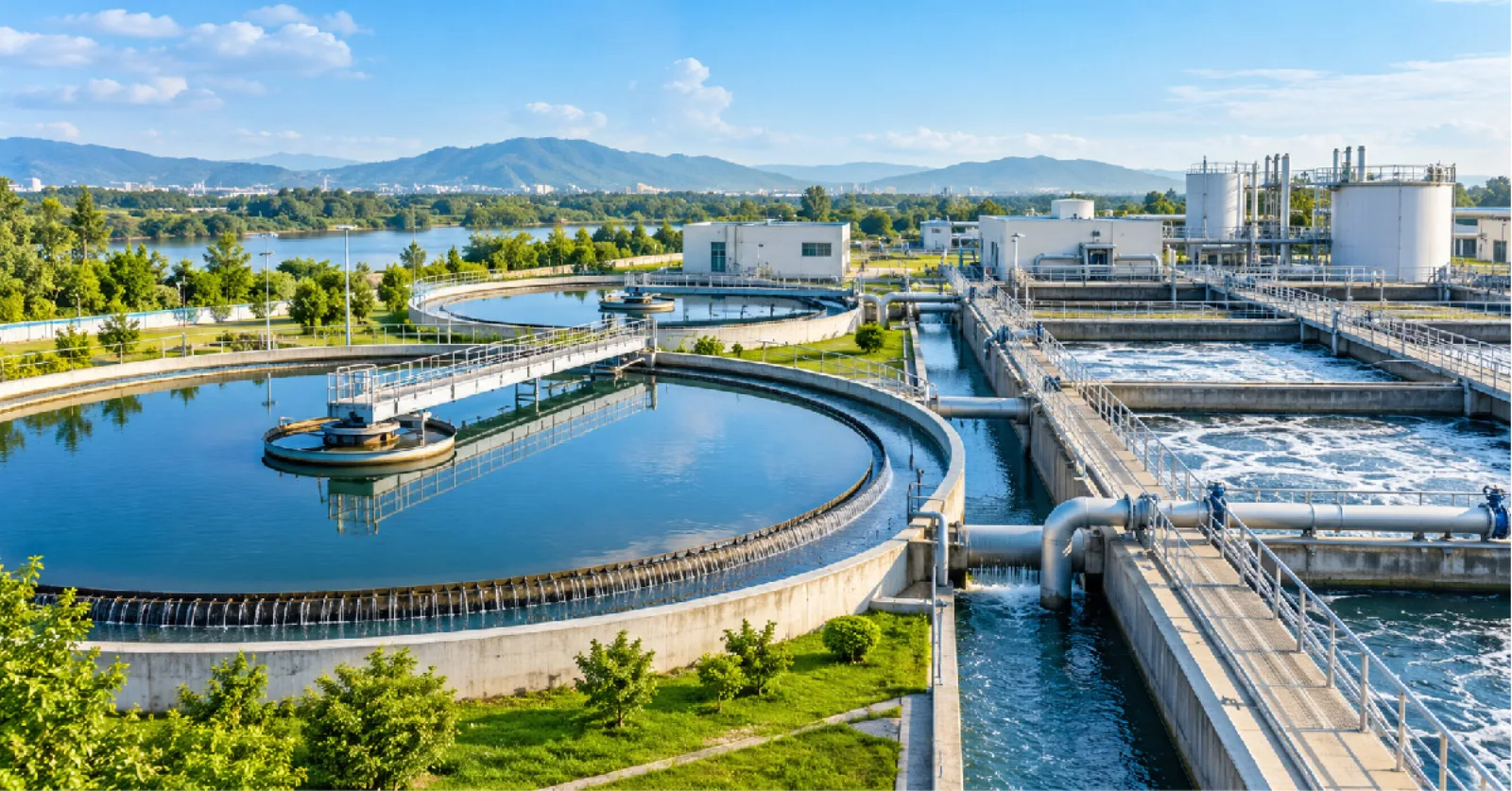
Municipal STPs treat sewage collected from larger communities and urban areas.
Industrial Facilities
Industrial sites may require STPs for domestic sewage generated by employees and supporting facilities, while industrial process wastewater is generally handled through separate effluent treatment systems.
Can Treated Sewage Be Reused?
Yes, treated sewage can be reused when it has been treated to the quality required for the intended application.
Potential reuse applications include:
- Gardening
- Irrigation
- Toilet flushing
- Cleaning
- Cooling
- Other suitable non-potable uses
Where higher-quality water is required, additional treatment such as UF or RO can be incorporated.
The required treatment level should always be based on the intended reuse application and applicable water-quality requirements.
How to Choose the Right STP Plant?
Selecting the right sewage treatment plant requires an assessment of both sewage characteristics and operational requirements.
Sewage Quality
Important parameters can include BOD, COD, TSS, pH, nutrients, and microbiological quality.
Treatment Capacity
Average and peak sewage flows should be considered along with occupancy and future expansion.
Required Output Quality
The required treated-water quality depends on whether the water will be discharged or reused.
Available Space
Compact technologies such as MBR or SBR may be considered where space is constrained, depending on the application.
Operating Requirements
Energy consumption, sludge generation, maintenance, automation, and operator requirements should also be considered.
Ion Exchange Sewage Treatment Solutions
Ion Exchange provides integrated sewage treatment plant solutions combining biological treatment, membrane technology, filtration, disinfection, and water-reuse processes.
Its capabilities include:
- Sewage treatment
- MBBR
- SBR
- MBR
- Filtration
- Ultrafiltration
- Reverse osmosis
- Disinfection
- Water recycling
- Sludge management
- Zero Liquid Discharge
Ion Exchange's sewage-treatment capabilities extend from conventional biological treatment to advanced membrane-based treatment and water-recovery solutions.
Its project experience includes a 1,350 m³/day sewage treatment plant for NEOM, Saudi Arabia, demonstrating its capability to deliver large-scale sewage-treatment infrastructure.
Why an Integrated STP System Matters?
An STP is not simply a biological-treatment unit. Its overall performance depends on how the different stages work together.
A typical integrated approach is:
Preliminary Treatment → Primary Treatment → Biological Treatment → Clarification → Tertiary Treatment → Disinfection → Reuse or Discharge
For facilities planning to reuse treated sewage, downstream membrane and purification technologies can also be incorporated into the overall treatment strategy.
Conclusion
A sewage treatment plant treats domestic and municipal sewage through a series of physical, biological, and advanced treatment stages.
From screening and grit removal to biological treatment, clarification, filtration, and disinfection, each stage helps reduce specific contaminants and improve treated-water quality.
The right STP system depends on sewage characteristics, flow, required output quality, available space, operating requirements, and reuse objectives.
Ion Exchange combines biological, membrane, filtration, and advanced treatment technologies to develop sewage treatment solutions for residential, commercial, municipal, and industrial applications.
Connect with Ion Exchange experts for customised sewage treatment plant, wastewater recycling, and water-reuse solutions.
FAQs
What is a sewage treatment plant?
A sewage treatment plant is a system designed to treat domestic or municipal sewage and reduce solids, organic matter, microorganisms, and other contaminants before discharge or reuse.
How does a sewage treatment plant work?
An STP generally uses screening, grit removal, primary treatment, biological treatment, clarification, tertiary treatment, and disinfection, depending on the required treated-water quality.
What is the difference between an STP and an ETP?
An STP primarily treats domestic or municipal sewage, while an ETP is designed to treat wastewater generated by industrial processes and their specific contaminants.
Can treated sewage water be reused?
Yes. Properly treated sewage can be reused for suitable applications such as gardening, irrigation, toilet flushing, cleaning, and cooling. Additional treatment may be required depending on the intended use.
How do I choose the right sewage treatment plant?
Consider sewage characteristics, flow capacity, required treated-water quality, available space, treatment technology, sludge management, operating requirements, and whether the treated water will be reused.