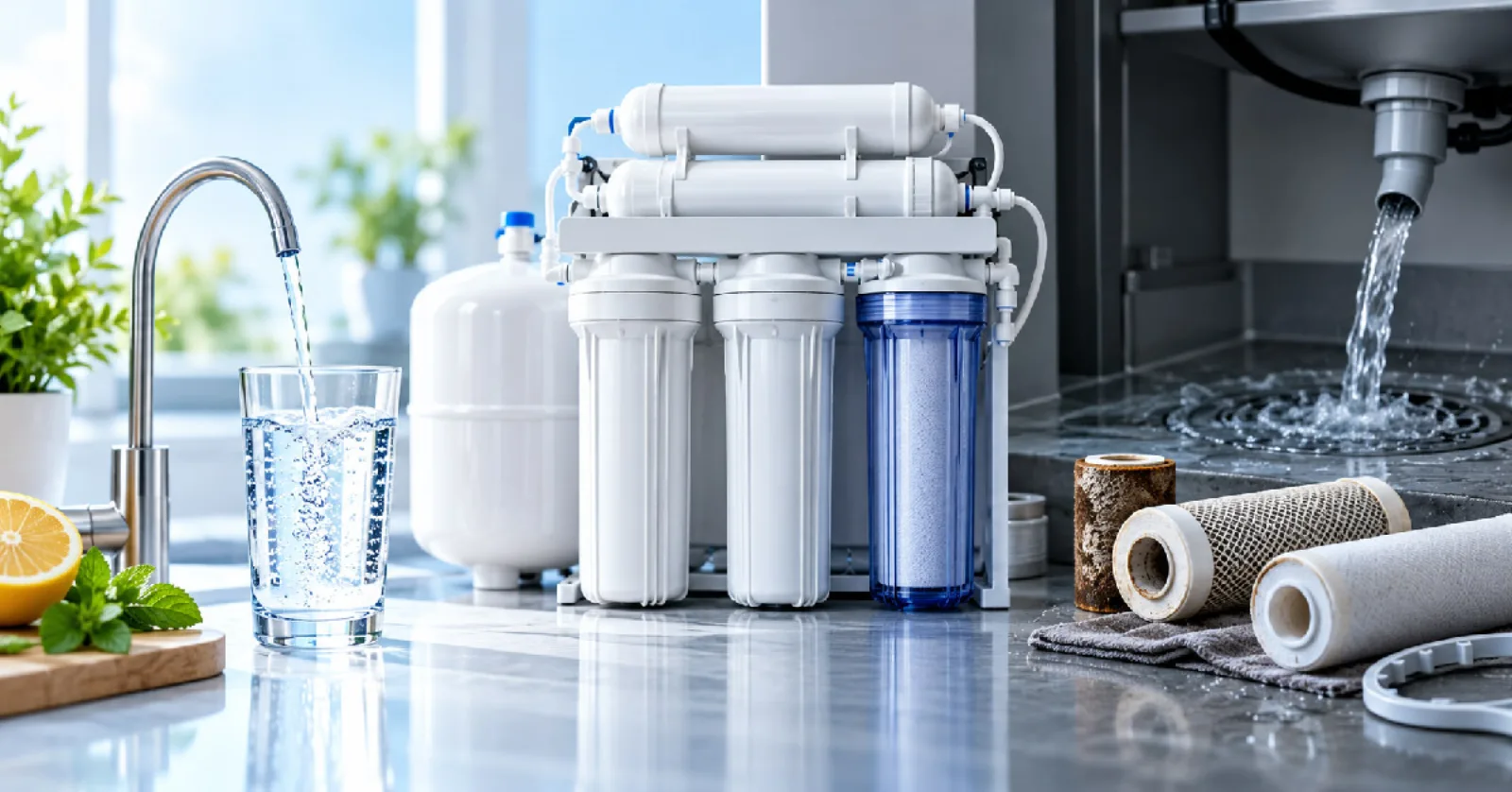
Water can contain dissolved salts, minerals, microorganisms, organic compounds, and other contaminants that affect its quality and suitability for different applications. Reverse osmosis (RO) is one of the most widely used membrane-based technologies for reducing dissolved contaminants and producing purified water.
However, like any treatment technology, a reverse osmosis system has both advantages and disadvantages. Understanding how RO works, where it performs well, and what limitations need to be managed can help industries and water-treatment operators choose the right system.
What Is Reverse Osmosis?
Reverse osmosis is a membrane-based water treatment process that uses pressure to force water through a semi-permeable membrane.
The membrane allows water molecules to pass while rejecting a significant proportion of dissolved salts and other contaminants.
The basic process is:
Feed water → Pretreatment → RO membrane → Permeate + Concentrate
The purified water produced by the membrane is called permeate, while the concentrated stream containing rejected contaminants is known as concentrate or reject.
How Does a Reverse Osmosis System Work?
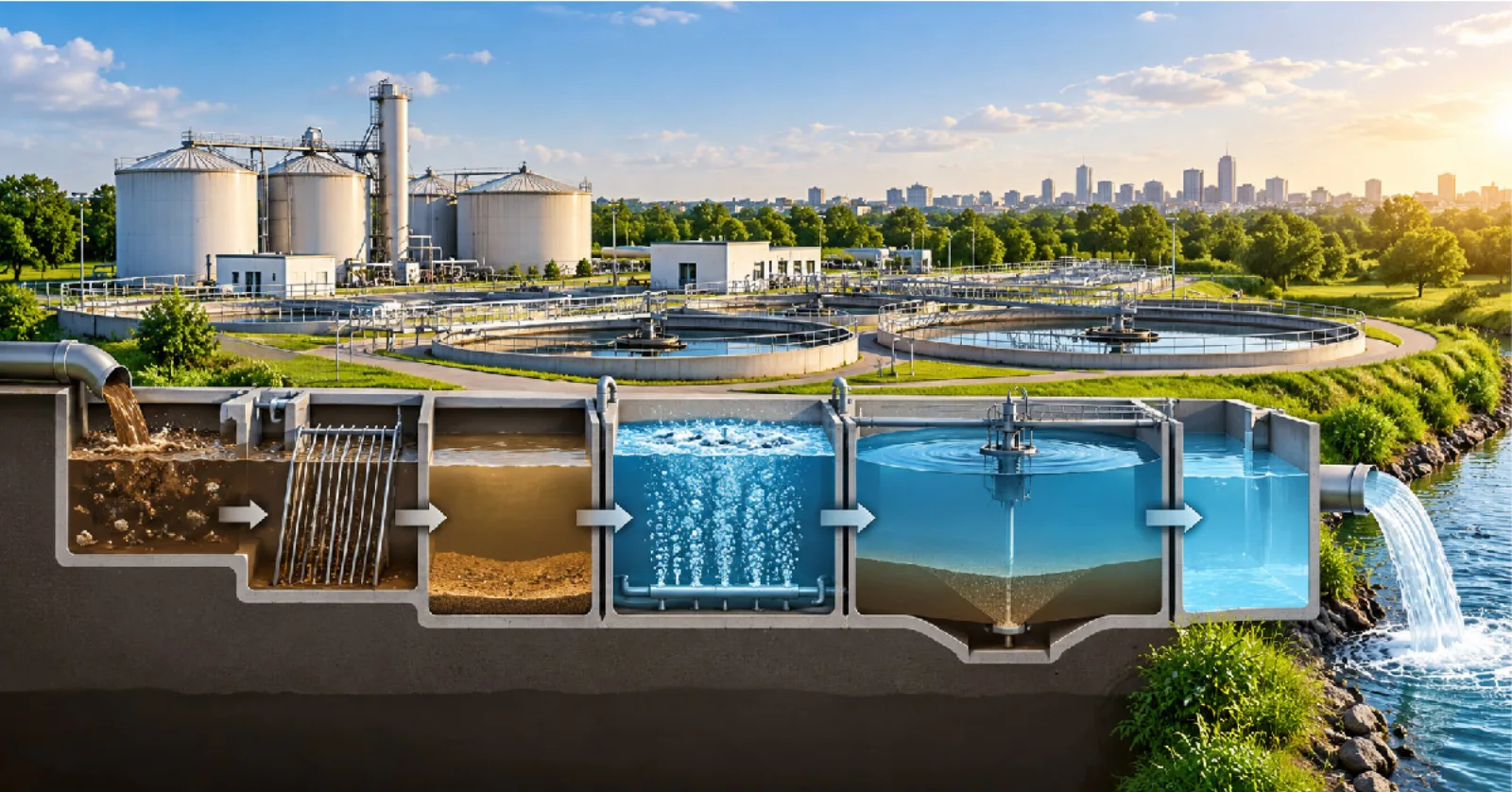
A typical reverse osmosis system consists of several stages.
Pretreatment
Feed water is treated before reaching the RO membrane to reduce suspended solids, hardness, chlorine, and other substances that can cause fouling or membrane damage.
Depending on the feed-water quality, pretreatment may include filtration, softening, activated carbon, or other processes.
High-Pressure Pumping
A high-pressure pump provides the pressure required to overcome the natural osmotic pressure of the feed water and drive water through the membrane.
Membrane Separation
The RO membrane separates water from many dissolved contaminants.
The treated water passes through as permeate, while rejected salts and contaminants remain in the concentrate stream.
Post-Treatment
Depending on the application, the permeate may require additional treatment or conditioning before use.
Advantages of Reverse Osmosis
1. High Removal of Dissolved Salts
One of the major advantages of reverse osmosis is its ability to significantly reduce dissolved salts and other contaminants.
This makes RO useful for applications where lower TDS and improved water quality are required.
2. Broad Contaminant Reduction
RO can reduce a wide range of dissolved contaminants, depending on membrane type, feed-water chemistry, operating conditions, and system design.
3. Consistent Water Quality
When properly designed and operated, RO can provide consistent permeate quality even when feed-water quality varies within the system's operating range.
4. Suitable for Different Applications
RO systems are used across:
- Drinking-water treatment
- Industrial process water
- Boiler feed-water treatment
- Pharmaceutical water systems
- Food and beverage
- Power plants
- Wastewater recycling
- Desalination
5. Can Be Combined With Other Technologies
RO can be integrated with pretreatment, ultrafiltration, ion exchange, electrodeionization, and other technologies to achieve specific water-quality requirements.
Disadvantages of Reverse Osmosis
While RO offers significant treatment benefits, there are also important limitations.
1. Water Recovery and Reject Generation
Not all feed water becomes permeate.
A portion remains as concentrate containing higher concentrations of rejected contaminants. This reject stream needs appropriate management.
2. Energy Requirement
RO requires pressure to drive water through the membrane. Energy consumption depends on feed-water quality, pressure requirements, recovery, system configuration, and membrane type.
3. Membrane Fouling
Suspended solids, organic matter, microorganisms, scaling compounds, and other contaminants can foul RO membranes.
Effective pretreatment and regular monitoring are therefore important.
4. Membrane Scaling
High concentrations of hardness, silica, and other scale-forming constituents can cause deposits on the membrane surface.
Pretreatment and appropriate operating controls help manage this risk.
5. Maintenance Requirements
RO systems require regular monitoring and maintenance, including checking pressure, flow, permeate quality, membrane condition, and pretreatment performance.
RO Water Recovery: Why Does It Matter?
Water recovery refers to the proportion of feed water converted into usable permeate.
For example, if a system receives 100 units of feed water and produces 75 units of permeate, its recovery is 75%.
Higher recovery can reduce water consumption, but increasing recovery also concentrates rejected contaminants and can increase the risk of scaling or fouling.
Therefore, recovery should be optimised according to feed-water chemistry and system design rather than simply maximised.
Reverse Osmosis vs Other Water Treatment Technologies
RO is not always the only or best treatment option.
RO vs Ultrafiltration
UF is mainly used for removing suspended solids, colloids, and microorganisms, while RO provides much greater removal of dissolved salts.
RO vs Nanofiltration
NF generally provides selective removal of dissolved contaminants and operates at lower pressures than RO in many applications. RO provides broader dissolved-solids removal.
RO vs Ion Exchange
Ion exchange removes specific dissolved ions through an exchange process and is commonly used for softening and demineralisation.
RO and ion exchange can also be combined where very high water quality is required.
Where Are Reverse Osmosis Systems Used?
Drinking Water
RO can be used to reduce dissolved salts and other contaminants where feed-water quality requires membrane purification.
Industrial Water Treatment
Industries use RO to produce process water with controlled dissolved-solids levels.
Boiler Feed Water
RO can serve as pretreatment for further demineralisation before water enters high-pressure boiler systems.
Pharmaceutical Water
RO can form part of a multi-stage treatment system for producing purified water.
Wastewater Recycling
RO can be used after appropriate wastewater treatment to recover water for suitable industrial reuse.
Desalination
RO is widely used for treating brackish water and seawater where dissolved salt concentrations are high.
Ion Exchange Reverse Osmosis Solutions
Ion Exchange provides reverse osmosis systems for industrial, municipal, commercial, and specialised water-treatment applications.
Its RO capabilities can be integrated with pretreatment, filtration, ion exchange, ultrafiltration, nanofiltration, and other technologies according to feed-water quality and required product-water specifications.
Ion Exchange's engineering portfolio includes RO-based treatment systems for industrial applications, including integrated systems combining filtration, UF, two-stage RO, mixed-bed, and other polishing technologies for high-quality and ultrapure water production.
The company also provides solutions for desalination, industrial water treatment, wastewater recycling, and advanced water recovery.
How to Choose the Right Reverse Osmosis System?
Selecting the right RO system requires more than knowing the required flow rate.
Analyse Feed-Water Quality
Important parameters include:
- TDS
- Hardness
- pH
- Turbidity
- Silica
- Iron
- Organic matter
- Microbiological quality
Define Required Permeate Quality
The required output quality depends on whether the water is intended for drinking, industrial processes, boilers, pharmaceuticals, or another application.
Determine Recovery Requirements
The desired recovery level should be evaluated alongside scaling potential, concentrate quality, and water availability.
Select Appropriate Pretreatment
Pretreatment should address the specific contaminants that could cause fouling, scaling, or membrane damage.
Consider Lifecycle Costs
Energy, chemicals, membrane replacement, cleaning, maintenance, and concentrate management all contribute to the overall cost of an RO system.
Ion Exchange: Advanced Reverse Osmosis Expertise
Ion Exchange combines membrane technology with broader water-treatment expertise to develop application-specific RO systems.
Its capabilities cover:
- Reverse osmosis
- Ultrafiltration
- Nanofiltration
- Ion exchange
- Filtration
- Demineralisation
- Water recycling
- Wastewater treatment
- Desalination
This integrated approach allows RO to be selected and configured as part of a complete treatment system rather than as a standalone membrane unit.
Conclusion
The main advantages and disadvantages of reverse osmosis depend on how the system is designed and operated.
RO provides effective reduction of dissolved salts and can produce consistent, high-quality water for a wide range of applications. However, membrane fouling, scaling, energy requirements, reject management, and maintenance need to be considered during system design.
The right RO system should therefore be selected according to feed-water chemistry, required permeate quality, recovery target, pretreatment requirements, and lifecycle costs.
Connect with Ion Exchange experts to evaluate your water quality and identify the right reverse osmosis system for your application.
FAQs
What are the main advantages of reverse osmosis?
The main advantages include high reduction of dissolved salts, consistent permeate quality, broad application across industries, and the ability to integrate RO with other water-treatment technologies.
What are the disadvantages of reverse osmosis?
Key limitations include energy requirements, membrane fouling and scaling, generation of concentrate or reject water, and the need for regular monitoring and maintenance.
Does reverse osmosis remove TDS?
Yes. RO membranes can significantly reduce dissolved salts and therefore lower the TDS of treated water. The actual removal depends on membrane type, feed-water chemistry, operating conditions, and system design.
Is reverse osmosis suitable for industrial water treatment?
Yes. RO is widely used for industrial process water, boiler feed-water pretreatment, pharmaceutical water, desalination, and wastewater recycling applications.
How can RO membrane fouling be prevented?
Appropriate pretreatment, regular water-quality monitoring, correct operating conditions, and timely membrane cleaning can help control fouling and maintain RO system performance.