For many facilities, sewage becomes a priority only when something starts going wrong. There may be persistent odour, inconsistent discharge quality, rising freshwater costs or an older treatment system that needs more attention every month. Ion Exchange takes a broader view. A well-designed sewage treatment plant should not exist simply to tick a compliance box. It should help a facility manage wastewater responsibly while creating opportunities to recover water for suitable reuse.
That sounds fairly straightforward. On the ground, it rarely is. Flow varies. Biological systems react to changing loads. Sludge needs proper handling. And the quality required from treated water depends heavily on what happens to it next. Understanding these realities before choosing a system can prevent expensive mistakes later.
What Is an STP and What Does It Actually Treat?
An STP facility utilizes wastewater produced mainly from various domestic processes such as flushing toilets, bathing, cooking, eating, and so forth. The main purpose is to decrease or eliminate solid waste materials, biological waste, and germs before the water is disposed of.
There is a big difference in treating domestic waste and industrial waste. Domestic sewage usually has a fairly predictable amount of biological materials compared to industrial wastewater, which may include oils, chemicals, metals, salt, and waste related to specific production processes.
Depending on the needs of the wastewater treatment, a wastewater treatment plant dealing with sewage may make use of the conventional biological systems, using sequencing batch reactors, membrane bioreactors, or compact modular technologies.
Sewage Treatment Plant Process: What Happens to the Water?
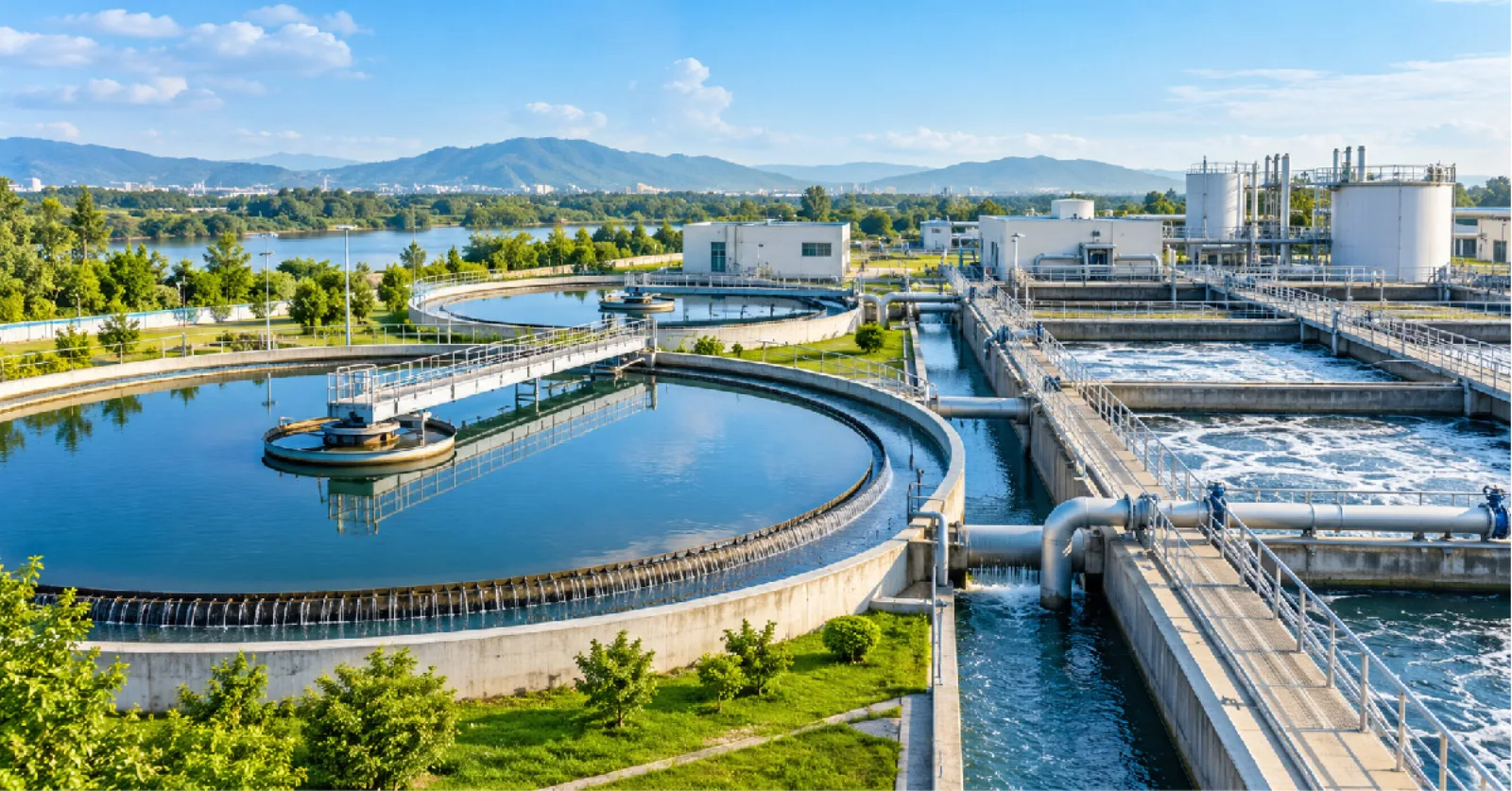
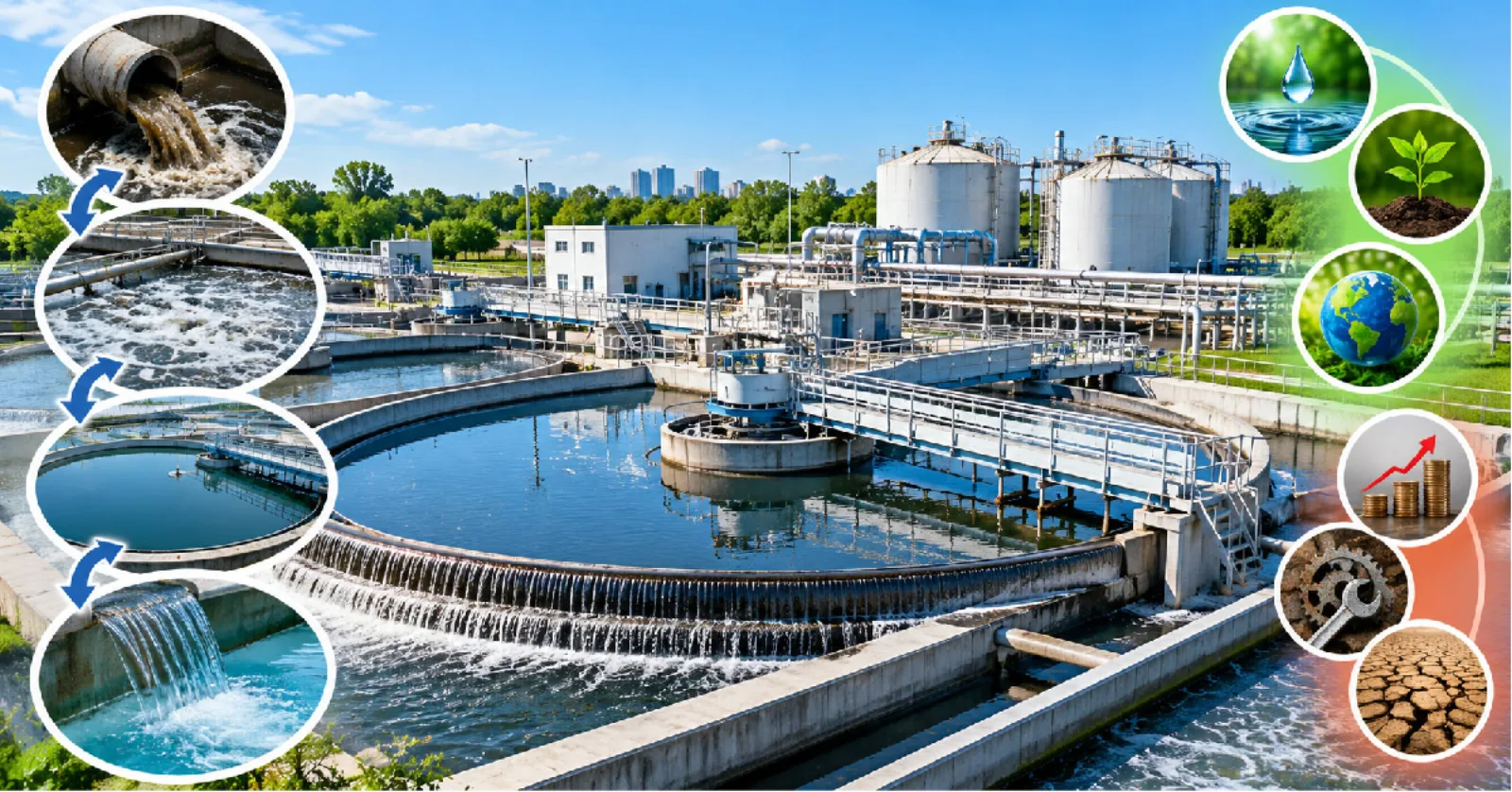
The sewage treatment plant process works through several stages. Each has a specific job, and skipping or poorly managing one stage often creates problems further downstream.
Preliminary and Primary Treatment
Raw sewage first passes through screening to remove plastics, cloth, debris and other coarse material. Depending on the source, grit and grease may also need to be separated.
The water then moves through primary settling or clarification, where heavier suspended material can settle out.
This part of the process may appear simple, but it protects everything that follows. Inadequate screening can mean blocked pumps, damaged equipment and unnecessary maintenance.
Biological Treatment
This is where much of the actual sewage treatment takes place.
Microorganisms consume organic matter, which is biodegradable, found in wastewater. In aerobic processes, air is added to sustain the activity of these microorganisms. The various technologies to accomplish this mission.
Ion Exchange has a line of products for the treatment of waste which includes such systems as aerobic systems, anaerobic systems, membrane bioreactors, and pre-packaged treatment plants.
However, there is one aspect of this operation worth knowing: biology cannot be just turned on and forgotten about. Changes in loads, insufficient aerating, poison presence in wastewater, or long disconnections can disrupt microbial settlements.
Clarification, Sludge Handling and Tertiary Treatment
Once biological treatment is complete, the biomass has to be separated from the water. This may happen through clarification, settling or membrane separation.
Some sludge may be returned to the process. Excess sludge needs to be removed and handled correctly. This is one area frequently underestimated during plant planning.
When better-quality treated water is required, additional filtration, disinfection, ultrafiltration, advanced oxidation or reverse osmosis can be considered. Ion Exchange defines tertiary treatment as the refinement stage following primary and secondary treatment and offers filtration, membrane and advanced oxidation technologies for further wastewater polishing.
Why Does an STP Plant Make Business Sense?
Compliance is an important reason, but stopping there misses part of the value.
A well-functioning STP plant can create a secondary potential water source for appropriate non-drinking applications. Depending on the quality of treated water and existing standards for its use, the recovered water can be utilized for flushing, landscaping, cooling-related operations, and many other utilities.
This principle is applicable to institutional campuses, industrial sites, big hotels, and hospitals, changing the whole water matter - it won’t always be obligatory to use freshwater.
There may be another benefit in terms of resilience as reclaimed water helps decrease the reliance on external freshwater sources. Additionally, reclaimed water can be of utmost importance in case of supply disruptions, rising costs of tankers, or local water shortages.
This principle can also be applied on a larger scale. Ion Exchange has experienced success in municipal sewage recycling projects in Gujarat where reclaimed municipal wastewater is used to replace freshwater for the needs of industry, providing a decrease in freshwater consumption, and avoiding discharges of wastewater into the sea.
Advantages and Disadvantages of Sewage Treatment Plant Systems
Anyone assessing the advantages and disadvantages of sewage treatment plant systems should look beyond the initial equipment price.
On the positive side, treatment can reduce pollutant discharge, support water reuse, lower freshwater demand and improve overall environmental performance. For sites with significant daily water consumption, those benefits can extend well beyond regulatory compliance.
But there are practical limitations.
Biological systems require monitoring. Aeration consumes power. Sludge has to go somewhere. Pumps, membranes, blowers and dosing equipment require maintenance. Poorly sized systems may also struggle when occupancy or wastewater load changes significantly.
Then there is space. Compact technologies can reduce footprint, but choosing the smallest possible system is not always good engineering. Saving civil space while accepting unnecessarily high energy or maintenance costs may prove expensive over the plant's operating life.
That is why lifecycle cost deserves as much attention as capital cost.
Why Do Sewage Treatment Systems Underperform?
Often, the trouble begins before commissioning.
One common mistake is designing around weak flow data. Average daily flow alone may not reflect peak loads, seasonal occupancy or future expansion. A system that looks adequate on paper can then struggle during real operating conditions.
Another problem is treating operation as an afterthought. Even an automated system needs routine checking of screens, pumps, aeration, sludge condition, dosing and treated-water quality.
There is also the question of reuse. Sometimes a system is originally designed for discharge, and only later does the facility decide that it wants to recover the water. Reaching the required reuse quality may then require additional polishing.
A better approach is to decide the expected outlet quality early and work backwards from it.
Choosing the Right Wastewater Treatment Plant
Start with your water balance, not a product catalogue.
How much wastewater is actually generated each day? How large are the peak variations? What quality is needed after treatment? Is the water going to be discharged, reused or treated further? What space is available? And who will operate the plant after handover?
These questions usually reveal more than comparing technical brochures.
For smaller or space-constrained installations, packaged systems can make sense. Ion Exchange's New Generation Packaged Sewage Treatment Plant combines treatment functions in a prefabricated, modular system designed for compact installation and simplified operation.
Larger sites or applications with demanding reuse requirements may need biological treatment followed by more advanced polishing technologies.
How Ion Exchange Supports Sewage and Wastewater Management
Ion Exchange brings more than six decades of experience across water and environmental management. Its solutions extend across water treatment, wastewater management, water reuse, zero liquid discharge, solid-waste management and waste-to-energy.
For sewage applications, the company offers technologies including aerobic and anaerobic treatment, membrane bioreactors, packaged systems, disinfection, odour management and downstream recycling processes.
That breadth is important because successful sewage treatment should not end with the question, “Have we treated the wastewater?”
A better question is, “What useful role can this treated water play next?”
When footprint, water recovery, operating cost, maintenance and long-term reliability are considered together, wastewater infrastructure can move from being viewed purely as a compliance expense to becoming part of a facility's wider water-management strategy.
Treat Sewage as a Water Resource
A sewage treatment plant performs best when it is designed around the complete water cycle rather than purchased as an isolated piece of equipment. Incoming characteristics matter. So do operating conditions, reuse goals, available space and the level of treatment expected at the outlet.
Technology is important, but good engineering starts before equipment selection.
If you are planning a new STP, upgrading an underperforming system or evaluating treated-water reuse, Ion Exchange can help assess your water balance, site conditions and long-term requirements to develop a solution focused on dependable performance and responsible water use.
Frequently Asked Questions
1. What is an STP plant used for?
An STP treats domestic wastewater generated from toilets, kitchens, washrooms and similar facilities. Treatment reduces solids, organic pollutants and microorganisms before the water is discharged or prepared for appropriate reuse.
2. What are the main stages of sewage treatment?
The usual stages include preliminary screening, primary separation, biological treatment, secondary clarification, sludge management and, where required, tertiary filtration and disinfection.
3. Can treated sewage water be reused?
Yes. Provided the treated water meets the required quality and applicable standards, it may be suitable for non-potable purposes such as toilet flushing, landscaping and certain utility applications.
4. What are the main limitations of sewage treatment systems?
Energy consumption, sludge generation, maintenance requirements and sensitivity of biological processes are common considerations. Higher-quality reuse applications may also need additional treatment.
5. How is an STP different from an industrial wastewater treatment plant?
An STP primarily deals with domestic sewage. An industrial wastewater treatment plant is engineered around process-specific pollutants that may include chemicals, oils, metals, salts and other industrial contaminants.