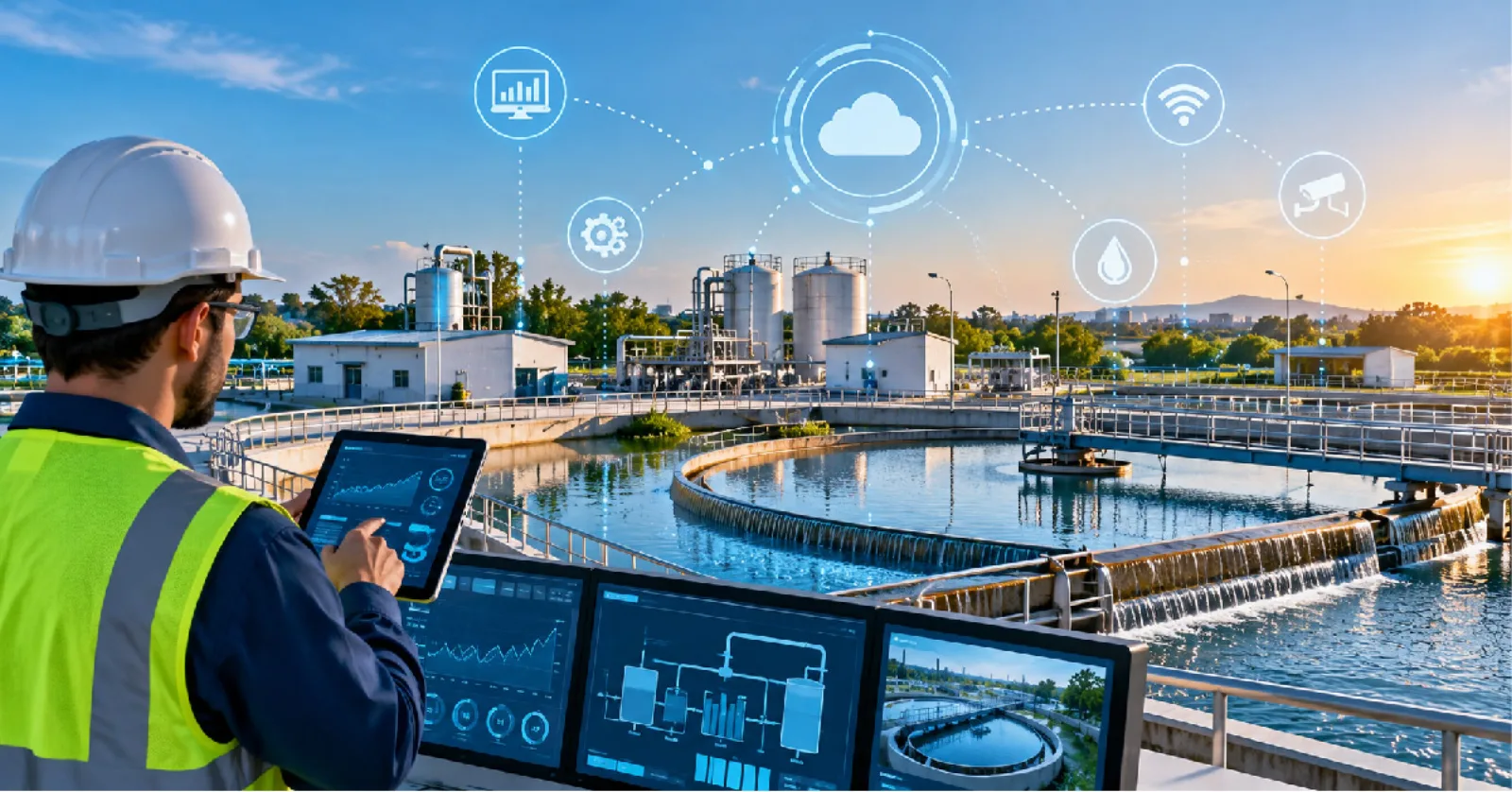
A water treatment plant rarely stops working without giving some warning. Pump pressure begins to rise, chemical consumption changes, or treated-water quality starts moving outside its usual range. The difficulty is spotting these changes before they affect production. Ion Exchange addresses this challenge through digital monitoring, automation and plant performance management solutions. With effective water treatment plant monitoring, operators can understand what is happening across their systems without being physically present at every piece of equipment.
For industries running multiple facilities or plants in remote locations, this can make daily operations considerably easier. But the real value goes beyond viewing readings on a screen. It comes from recognising patterns early and responding before a small operating problem becomes an expensive one.
Why Conventional Plant Monitoring Has Its Limitations
Many operators today still rely on manual readings, shift reports, and periodic inspections. These procedures continue to remain very important. A problem arises when some event intervenes between the inspection rounds.
Let us say a reverse osmosis plant records a gradual increase in its differential pressure during the night shift. While the change will not instantaneously affect production, it will go unnoticed. A couple of days later, the permeate output will decrease and the membranes will need cleaning. The data was there but no one made the connections early enough.
Remote monitoring is exactly what is needed in this situation. Instead of waiting for the next inspection, the plant staff will be able to take a look at the operating data and be notified if selected parameters go out of the predetermined range.
How Remote Water Treatment Plant Monitoring Works
A remotely connected treatment plant uses instruments and control systems to collect information from different stages of operation.
Sensors measure parameters such as flow, pressure, pH, conductivity, turbidity, dissolved oxygen and tank levels. Depending on the application, additional analysers may monitor specific water-quality indicators.
These readings are collected through programmable logic controllers (PLCs), data acquisition equipment or other compatible systems.
The information can then be displayed through a local control interface or securely transmitted to an authorised remote platform.
With remote monitoring of water treatment plants, authorised engineers can review operating conditions, examine historical trends and investigate alarms without travelling to the site for every issue.
However, not every parameter can be measured directly online. Some tests still require laboratory analysis, sampling or physical inspection.
Remote systems support plant operators. They do not eliminate the need for trained people on site.
SCADA Water Treatment: Bringing Plant Data Together
SCADA, often known as Supervisory Control and Data Acquisition, is widely utilized in industrial automation.
In SCADA water treatment solutions, different information is presented in a single application as a part of SCADA system.
The platform enables the operators to help keep track of the equipment condition, check the alarms, monitor the operation parameters and, if necessary, carry out operations within the SCADA.
It is important to consider the difference between local SCADA and SCADA with remote access.
The plant may have an excellent SCADA solution while not providing an access from outside.
Remote access requires additional communication channel management and safety measures.
Organizations that want to implement digital solutions need to understand the task as follows: making key operating data accessible and easily visualized instead of collecting more and more data.
Detecting Problems Before They Cause Downtime
One of the most practical benefits of remote water treatment monitoring is earlier identification of abnormal operating conditions.
Consider a filtration system where pressure loss gradually increases. This may indicate filter loading, fouling or another hydraulic restriction.
If operators can review the trend, they may investigate the issue before flow becomes severely restricted.
The same principle applies to RO membranes, pumps, blowers and chemical dosing equipment.
A sudden change in conductivity could indicate a water-quality issue. Falling tank levels may point to an interruption in supply. Repeated pump alarms may suggest an equipment problem requiring maintenance.
The monitoring platform cannot diagnose every fault automatically. But it can provide the information needed for faster investigation.
Better Control Over Water Quality
Consistent treated-water quality matters in boilers, cooling systems, manufacturing processes and wastewater discharge.
Even modest changes in feedwater characteristics can influence treatment performance.
Online instruments can help operators observe selected parameters continuously rather than relying entirely on periodic samples.
For example, conductivity trends in an RO system may reveal changes that deserve attention. Similarly, unusual pH readings in an effluent treatment plant could indicate an incoming wastewater disturbance.
Effective water treatment plant monitoring helps teams recognise these conditions sooner.
The results should still be interpreted alongside laboratory testing, calibration records and operating knowledge. An inaccurate sensor can create unnecessary alarms or, worse, provide false confidence.
Managing Chemical and Energy Consumption
Treatment chemicals and electricity are recurring expenses that can significantly influence plant operating costs.
Blowers, pumps, membrane systems and chemical dosing equipment may run for long periods each day. Small inefficiencies can accumulate.
A monitoring system can help identify unusual consumption patterns.
For instance, if a pump starts using more energy while delivering less flow, the change deserves investigation. Similarly, increasing chemical usage without an equivalent change in water quality may indicate incorrect dosing or a process problem.
With suitable instrumentation, SCADA water treatment systems can help teams compare consumption against production and treatment performance.
The aim is not necessarily to reduce every operating setting. It is to understand whether resources are being used effectively while maintaining the required water quality.
Practical Use Cases Across Different Treatment Plants
The applications of remote monitoring of water treatment plants vary according to the treatment process.
Reverse Osmosis Plants
Remote systems can track feed pressure, differential pressure, permeate flow, conductivity and recovery. Changes in these readings may indicate fouling, scaling, membrane deterioration or variations in feedwater quality.
Effluent and Sewage Treatment Plants
Operators can monitor tank levels, aeration conditions, dissolved oxygen, pH, flow and other available process measurements. This helps identify disturbances in biological treatment and changes in hydraulic loading.
Industrial Utility Water Systems
Cooling and boiler water systems benefit from visibility into conductivity, chemical dosing, makeup water, blowdown and other operating parameters.
Multiple Plant Locations
Companies managing several facilities can bring selected information into a central monitoring arrangement.
This can make it easier for engineering teams to compare performance, support local operators and identify sites requiring closer attention.
Remote Access Also Needs Cybersecurity
Linking industrial equipment to external networks creates risks that must not be ignored.
Weak passwords, no limitations on access, and poorly protected communication systems can lead to unauthorized actions against vital operations of the plant.
Hence, safe access must be envisaged as part of the system design.
User permissions, multi-stage access, segmenting networks, encrypted communication, and regular maintenance of the connecting device must be in place.
Remote observation is treated differently from remote control. Not all people that need the information about the plants should get the right to change the operation parameters.
Reliable monitoring should guarantee safe treatment process and guarantee monitoring of its progress.
How Ion Exchange Supports Remote Plant Monitoring
Ion Exchange provides remote monitoring systems as part of its wider water and wastewater management services.
Its specialised software allows users to configure alerts, access critical process information and capture, analyse, store and share plant data across authorised teams.
The company also offers INDION monitoring instruments and automation solutions for important water-quality parameters.
For more advanced applications, Ion Exchange's IONSiTE Digital Twin uses process modelling and data analysis to support plant performance assessment, forecasting and operating recommendations.
These capabilities can be useful for industrial facilities where experienced engineering support is not always available on site.
A plant may need help identifying recurring equipment problems. Another may want better visibility into chemical consumption or variations in treated-water quality.
Rather than viewing automation as a separate addition, Ion Exchange can consider monitoring alongside treatment processes, operations and maintenance requirements.
Better Visibility Leads to Better Decisions
A treatment plant produces operating information throughout the day. Pressure changes, flow variations, equipment alarms and water-quality readings all reveal something about its condition.
The challenge is making that information useful.
With effective water treatment plant monitoring, industries can identify unusual trends, support preventive maintenance and make more informed operating decisions.
For businesses evaluating the benefits of remote water treatment monitoring, the starting point should be the problems they want to solve. Better alarm management, reduced unplanned downtime, energy visibility and centralised technical support are all worthwhile objectives.
Looking to improve visibility and control across your water treatment operations? Connect with Ion Exchange to explore remote monitoring, automation and digital performance management solutions suited to your facility.
Frequently Asked Questions
1. What is remote water treatment plant monitoring?
Remote monitoring allows authorised personnel to view selected plant parameters, equipment conditions and operating trends from another location through connected instrumentation and software.
2. What are the main benefits of remote water treatment monitoring?
The main benefits include earlier detection of abnormal conditions, improved operational visibility, faster troubleshooting, better maintenance planning and easier performance management across multiple facilities.
3. How does SCADA water treatment work?
SCADA systems collect information from instruments, PLCs and treatment equipment. They allow operators to view process conditions, manage alarms and, where configured, control selected equipment.
4. Can remote monitoring reduce water treatment plant downtime?
It can help reduce avoidable downtime by highlighting abnormal operating trends and equipment issues early. Actual results depend on instrument accuracy, alarm configuration, maintenance practices and operator response.
5. Is remote monitoring suitable for an existing water treatment plant?
Yes. Many existing plants can be upgraded with compatible instruments, data acquisition systems and secure communication infrastructure. The scope depends on the age, configuration and condition of the existing equipment.