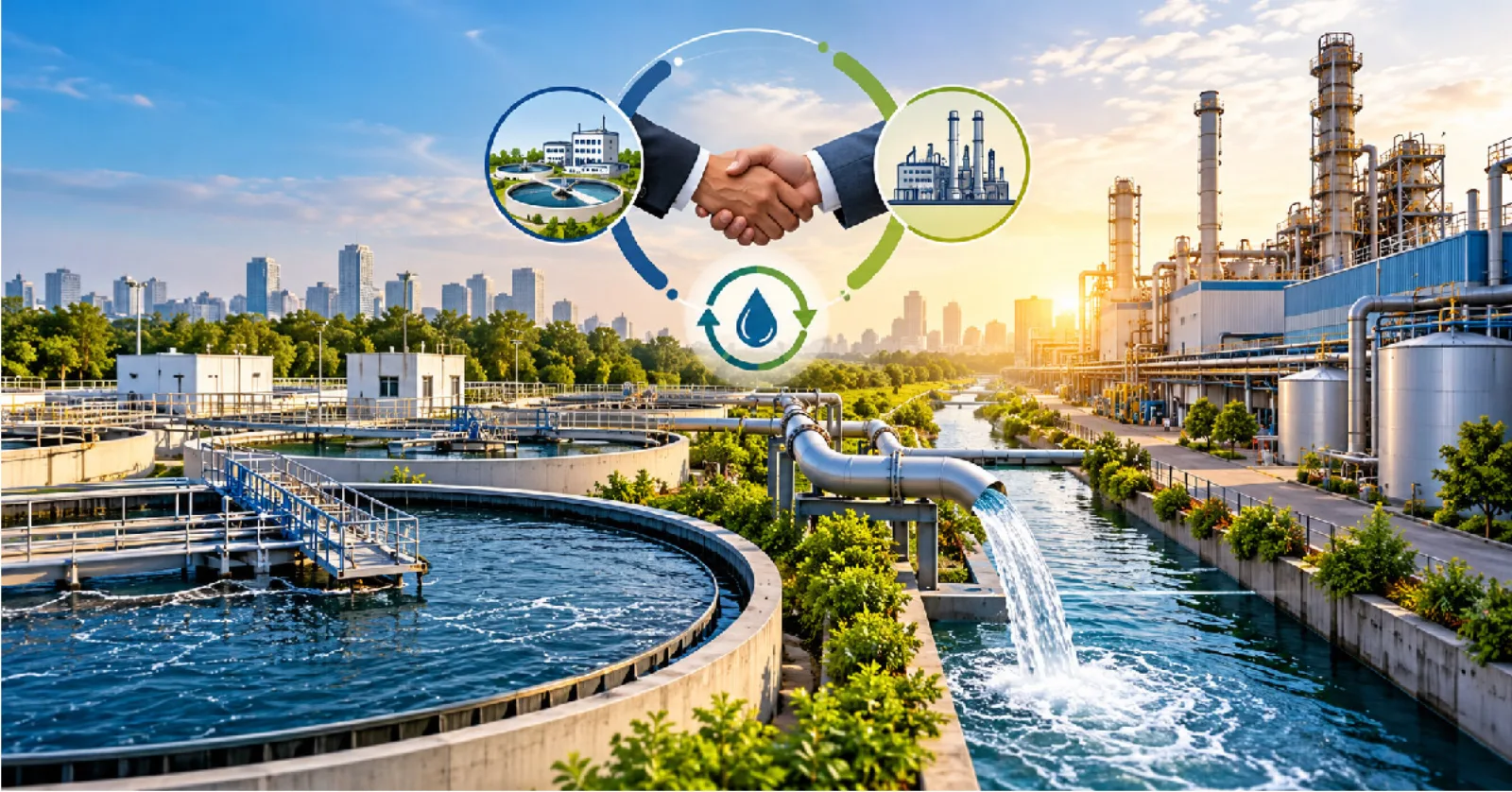
A city may struggle to manage thousands of litres of sewage every day while an industrial facility just outside its limits struggles to secure enough water for production. Both are spending money to solve what appears to be a different problem. But what if one could help solve the other? Ion Exchange has demonstrated how municipal sewage reuse can connect urban wastewater management with industrial water demand through well-planned public-private partnerships.
For industries operating in water-stressed regions, treated municipal sewage is becoming more than an environmental initiative. It offers an alternative water source that can support production, reduce dependence on freshwater and create value from infrastructure that cities already need.
Why Municipal Wastewater Is Becoming an Industrial Resource
Sewage production in cities is always high, irrespective of the infrastructure available to process it.
Industries, on the other hand, draw a lot of water from rivers, reservoirs and underground aquifers. In dry seasons, these sources may run out.
Municipal sewage can now be channelled back into industries through treatment.
Instead of letting treated sewage flow back to a water body, municipalities can send the water to industries after treating it.
Reclaimed water can be used in power generation, textiles, manufacturing, etc.
It should be noted, however, that different processes require different water quality.
Cooling towers are quite different from boilers and production activities - and so, the system for treating sewage must be developed on the basis of the final use.
Why Conventional Sewage Projects Often Struggle
Building a sewage treatment plant is one challenge. Keeping it operational for years is another.
Municipal authorities must manage capital expenditure, electricity costs, maintenance, skilled manpower and changing sewage loads. Treatment plants can also struggle when operating budgets are insufficient or equipment is not maintained properly.
There is another problem that receives less attention.
Even when sewage is treated, there may be no dedicated customer or pipeline network to reuse it.
The water is treated and then discharged because nobody has planned where it should go.
This is where public private partnership in wastewater treatment can offer a practical alternative.
When industrial customers are involved from the planning stage, the project can be designed around actual demand rather than treatment capacity alone.
How PPP Wastewater Treatment Models Work
A public-private partnership allows government bodies and private organisations to share project responsibilities through a defined commercial arrangement.
In a standard industrial reuse initiative, access to wastewater is provided by the municipality, which may also offer land or infrastructure. On the other hand, the private partner takes on some responsibilities in a project, such as implementing the design, construction, financing, or operations of the treatment facilities, depending on the contract. An industrial player in a project is obliged to buy the treated water that meets the specified quality requirements, which is of great importance because it establishes a stable flow of income which is necessary for financing, maintaining, and operating the facilities. However, models of accomplishing the project vary because some projects involve a build-operate-transfer model while in others long-term contracts of treatment or purchase of water are signed.
A Working Example from Gujarat
The value of municipal sewage reuse becomes clearer when looking at an actual industrial project.
Welspun's textile manufacturing operations in Anjar, Gujarat, faced a serious water availability challenge. The region is relatively dry, while the company's operations required a dependable source of water.
Rather than depending entirely on conventional freshwater supplies, a different proposal emerged.
Ion Exchange and Welspun worked on a project to treat sewage generated by nearby urban communities and use the recovered water for industrial operations.
The project was developed under a PPP arrangement involving the Gujarat government, Welspun and Ion Exchange.
Welspun funded the project, while Ion Exchange was responsible for engineering, construction-related execution, commissioning and treatment-system support.
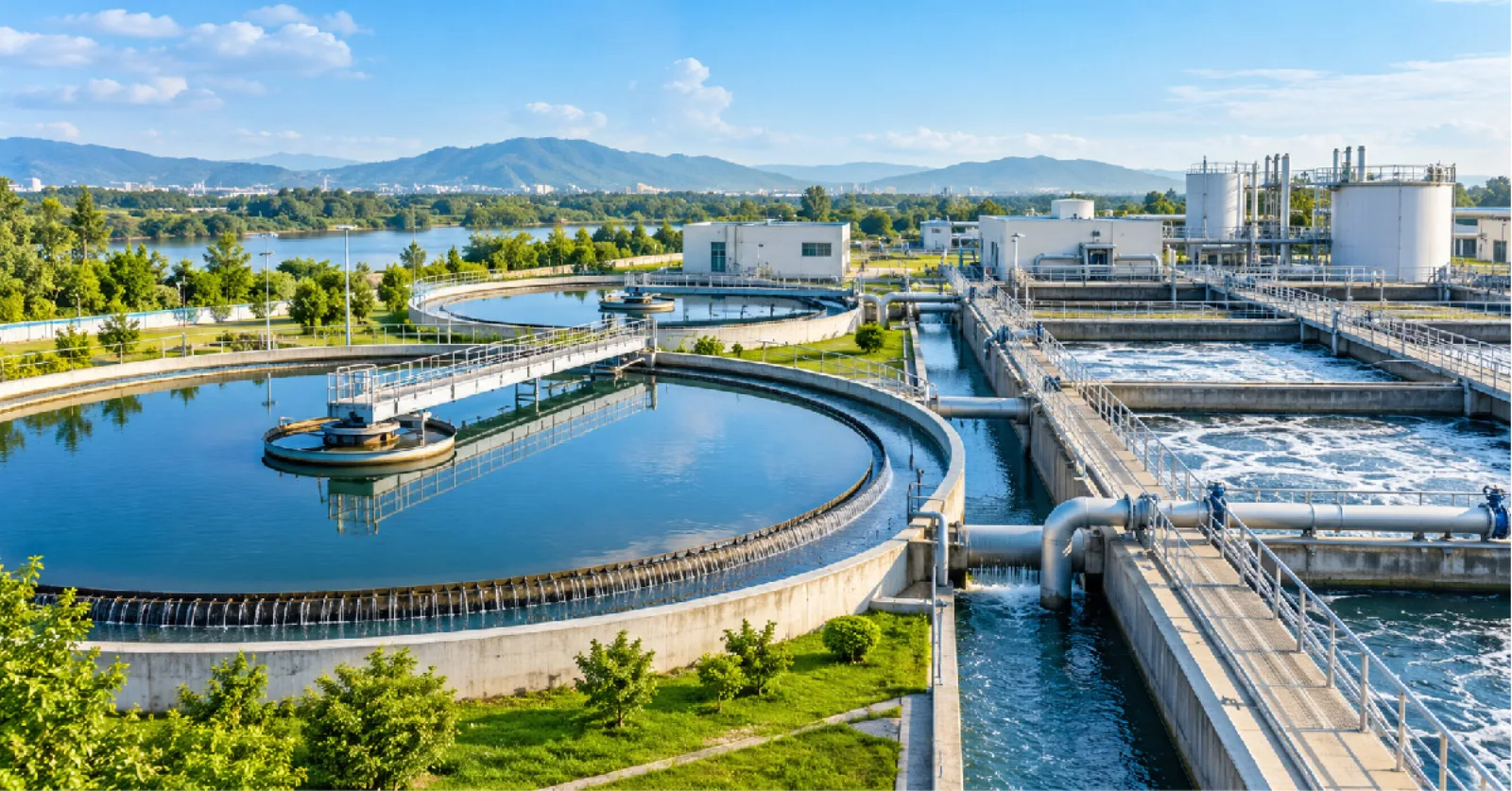
An initial 30 MLD sewage treatment facility served sewage from Anjar and Adipur. A further 40 MLD facility was subsequently added for Gandhidham.
Together, these projects demonstrate how industrial water demand can support municipal wastewater infrastructure.
The benefit extends beyond the factory. Sewage that might otherwise enter the environment can be treated and put to productive use.
Getting Water Quality Right for Industrial Applications
One concern industries often raise is whether treated municipal sewage can provide consistent water quality.
It is a reasonable concern.
Municipal sewage contains organic matter, suspended solids, nutrients, microorganisms and other contaminants. Its composition can also fluctuate with rainfall, sewer infiltration and local discharge patterns.
For reliable treated wastewater reuse, the treatment process must account for these variations.
Depending on the application, treatment may include biological processes, clarification, filtration, ultrafiltration, disinfection or reverse osmosis.
The final treatment stage depends on the intended use.
A cooling-water application may need different quality parameters from a high-purity process-water requirement.
Regular monitoring, dependable pretreatment and appropriate storage are equally important. Without them, even a technically capable treatment plant can struggle to deliver consistent results.
The Financial Side of Municipal Sewage Reuse
Water reuse projects are often discussed in terms of conservation. For industries, the economics deserve just as much attention.
A factory considering an alternative water source must compare the complete delivered-water cost.
That includes treatment, pumping, pipeline infrastructure, electricity, chemicals, maintenance and any additional polishing required at the industrial site.
Distance can become a deciding factor.
A sewage treatment facility located close to a large industrial consumer may offer attractive economics. The same project could become expensive if reclaimed water must be pumped over long distances.
Water-purchase agreements also need careful planning.
Minimum offtake commitments, quality guarantees, tariff escalation, responsibility for interruptions and payment arrangements can all affect project viability.
A successful PPP wastewater treatment project therefore needs sound commercial engineering alongside technical engineering.
What Makes a PPP Model Sustainable?
The strongest arrangements do more than divide construction costs.
These institutions deal with water quality, responsible for operations, supplying funds for upgrades and responding to changing levels of sewage production and industrial requests.
When dealing with the municipal sewage to be reused for industry, there are three topics that are of high importance: reliability of supplied sewage, confirmed demand from industrial partners and clear assignment of responsibilities.
The success of the project depends on the fact that the municipality can guarantee the required volume of sewage. Failure of the industry to withdraw the planned volume from the plant may change project financing.
In case there are no specified quality requirements, the parties may have disputes concerning reclaimed water not meeting specifications.
Complications should be solved before starting construction.
That is why public private partnership in the area of wastewater management can be realized successfully.
How Ion Exchange Supports Industrial Sewage Reuse
Ion Exchange brings experience in sewage treatment, wastewater recycling, membrane technologies, engineering, procurement, construction and operation and maintenance.
Its work with Welspun in Gujarat shows how a treatment partner can help connect municipal wastewater availability with industrial demand.
Rather than treating the sewage plant as an isolated project, the focus is on designing a system that delivers water suitable for the end user's application.
This broader approach matters because reuse projects involve several connected decisions: treatment capacity, water quality, pumping infrastructure, reliability and long-term operating costs.
Ion Exchange's experience in treated wastewater reuse helps industries explore alternative water sources while supporting municipal wastewater management.
Turning Urban Wastewater into Industrial Value
Cities need better sewage treatment. Industries need dependable water supplies. Treating these challenges separately can mean missing opportunities that benefit both.
Municipal sewage reuse offers a way to connect the two through suitable treatment technology, dedicated infrastructure and practical commercial arrangements.
For industrial businesses, the opportunity is not simply to replace freshwater. It is to build greater confidence in long-term water availability.
For municipalities, partnerships can create a productive destination for treated sewage and support continued investment in wastewater infrastructure.
Planning an industrial water-reuse project? Connect with Ion Exchange to explore sewage treatment, recycling and integrated project solutions designed around your facility's water requirements.
Frequently Asked Questions
1. What is municipal sewage reuse?
Municipal sewage reuse involves treating sewage collected from urban areas to a quality suitable for specific applications, including industrial cooling, utilities and other non-potable uses.
2. How does PPP wastewater treatment benefit industries?
PPP wastewater treatment can provide industries with access to an alternative water source through long-term arrangements that define treatment, infrastructure, supply and operating responsibilities.
3. Is treated wastewater reuse safe for industrial applications?
Yes, provided the water is treated and monitored to meet the specific quality requirements of its intended industrial application. Additional polishing may be necessary for sensitive processes.
4. What is the role of a public private partnership in wastewater treatment?
A public-private partnership can distribute financing, construction, operation and commercial responsibilities among municipalities, private operators and industrial water users.
5. Which industries can benefit from municipal sewage reuse?
Thermal power generation, textiles, manufacturing and other water-intensive industries may benefit where sufficient municipal sewage is available and treatment can meet their operating requirements.