
Overview
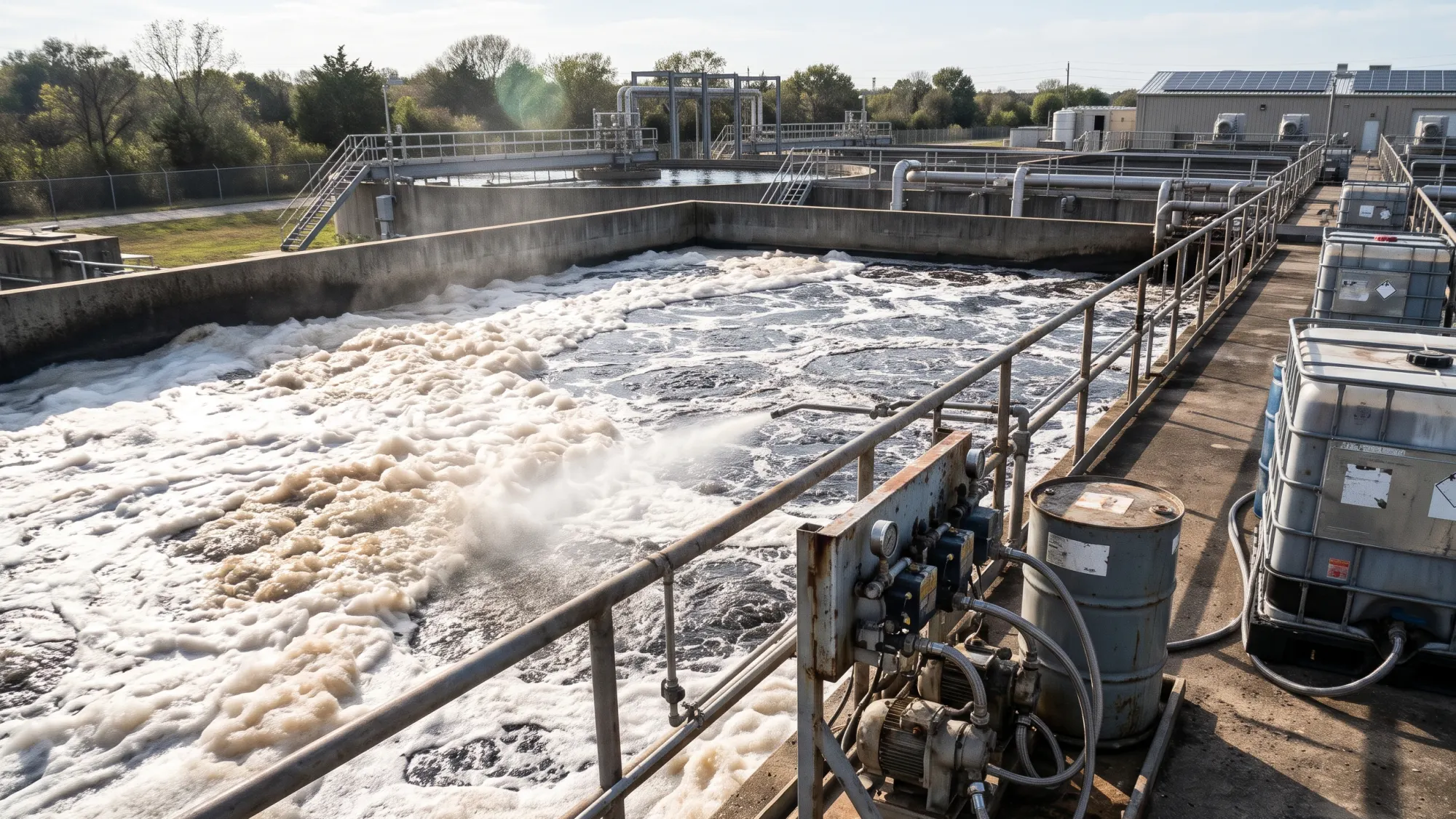
Foaming affects almost every industrial sector: from pharmaceuticals to brewing, from paint manufacture to waste water treatment, from oil and gas to food processing, from textiles to pulp and paper. Foam may be an integral and important part of a process or it may be an unwanted side effect.
Ion Exchange offers a complete range of antifoaming, defoaming and deaerating solutions for various processes. The product line includes silicone and non-silicone based products, with customised defoamers for different industry sectors.
 Speciality Chemical Treatment Programmes for Water and Process ApplicationsPDFDownload
Applications
Textile
Foam can entangle fabric, causing machine breakdowns, uneven absorbency and spotty dyeing.
Pulp and paper
Surface active ingredients remaining in the pulp generate foam at the paper machine, which weakens bonding between paperboard layers and leaves foam holes and patches.
Pharmaceutical
Precise foam control matters during the fermentation processes that produce antibiotics, vaccines and steroids.
Food and beverage
Sugars, fatty acids and proteins are surface active, so foam arises in deep-fried and deep-frozen foods, frying oils, gelatine, fruit preservation and vegetable washing.
Sugar
Organic compounds, surfactants and impurities in cane or beet juice cause foam that reduces equipment efficiency and can cause overflow.
Effluent treatment
Surfactants, detergents and organic compounds lower surface tension, and filamentous bacteria in aeration tanks add to foaming, which hinders treatment efficiency.
Paint
Air trapped during high-speed mixing or application forms bubbles, giving pinholes, reduced gloss and uneven film.
Process use and chemical role
Choose a defoamer by process stream
| Process stage or system | Chemical or operational role |
|---|---|
| Water and general process | INDFOAM 1500, 1501 and 1502 for water process duty, with 1501 and 1502 also applied in effluent treatment. |
| Pharmaceutical fermentation | INDFOAM 2001, a water soluble silicone antifoam free from mineral oil and silica. |
| Coating, paper and paint | INDFAOM 2346, a mineral oil based non-silicone antifoam for coating, general paper process and general paint defoaming. |
| Desalination, distillation and evaporation | INDFOAM 2300 for desalination, distillation and multiple-effect evaporators, and INDFOAM 2300M for multiple-effect evaporators. |
| Paper back water and wet end | INDFOAM 3000, 3000HS, 3001, 3002, 3003 and 3004 across back water, wet end and deaerator duty. |
| Alkaline and acidic systems | INDFOAM 3040 for foam control in highly alkaline and highly acidic systems. |
| Sugar, distillery and fermentation | INDFOAM 5001, 5002, 5003 and 5004 across sugar process, distilleries and fermenters. |
Benefits and intended outcomes
OUTCOME 1
Foam generation can cause environmental pollution, product contamination, loss of product through excessive foaming, and downtime and clean-up costs if foam spills from the process.
OUTCOME 2
Excess foam can severely limit product throughput and can damage equipment including pumps, filters and valves.
OUTCOME 3
The range covers silicone and non-silicone chemistries, including grades free from mineral oil, silica or silicone where the process requires it.
Product range and examples
INDFOAM 1500
Water soluble PDMS based emulsion. Active content 23 to 27 percent, viscosity 100 to 1000 cps. Water process application.
INDFOAM 1501
Glycol based defoamer, water miscible and free from silicone. Active content 18 to 25 percent, viscosity 100 to 1000 cps. Water process and ETP application.
INDFOAM 1502
Modified and effective glycol defoamer, water miscible and free from mineral oil and silica. Active content 15 to 25 percent, viscosity 100 to 1000 cps. Water process and ETP application.
INDFOAM 2001
Water soluble silicone antifoam, free from mineral oil and silica. Active content 23 to 27 percent, viscosity 100 to 1000 cps. Fermenter and pharmaceutical applications.
INDFAOM 2346
Mineral oil based antifoam, non-silicone. Active content 90 to 95 percent, viscosity 150 to 500 cps. Coating process, general paper process and general paint defoaming.
INDFOAM 2300
For desalination, distillation and multiple-effect evaporator duty.
INDFOAM 2300M
Polyoxyethylene based. Active content 30 to 60 percent. Multiple-effect evaporator duty.
INDFOAM 3000
Mixed glycol based defoamer, water miscible and free from silicone. Active content 23 to 27 percent, viscosity 500 to 3000 cps. Paper back water process.
INDFOAM 3000HS
High concentrate glycol defoamer, water miscible and free from silicones and silica. Active content 27 to 30 percent, viscosity 500 to 3000 cps. Paper back water process.
INDFOAM 3001
High concentrate glycol defoamer, water miscible and free from silicones and silica. Active content 23 to 27 percent, viscosity 500 to 3000 cps. Paper process and ETP application.
INDFOAM 3002
Glycol based defoamer, non-ionic and non-toxic. Active content minimum 10 percent. Pulp and paper production and waste water treatment.
INDFOAM 3003
Glycol based defoamer, non-ionic and non-toxic. Active content minimum 25 percent. Pulp and paper production and waste water treatment.
INDFOAM 3004
Fatty alcohol defoamer, free from silicones. Active content 27 to 30 percent, viscosity 500 to 2000 cps. Wet end paper making process and deaerator.
INDFOAM 3040
Modified blend of effective glycols, water miscible and free from waxes, mineral oil and silica. Active content 27 to 30 percent, viscosity 500 to 2000 cps. Foam control in highly alkaline and highly acidic systems.
INDFOAM 5001
Glycol based. Active content 20 to 25 percent, viscosity 500 to 1500 cps. Sugar process, distilleries and fermenters.
INDFOAM 5002
Glycol based. Active content 27 to 30 percent, viscosity maximum 3000 cps. Sugar process, distilleries and fermenters.
INDFOAM 5003
Silicone based. Active content 22 to 25 percent. Sugar process and distilleries.
INDFOAM 5004
Silicone based. Active content 10 to 13 percent, viscosity 500 to 2000 cps. Sugar process and fermentation of molasses.
Selection and implementation
SYSTEM-SPECIFIC SELECTION
Choose the grade for the process stream, its temperature and pH, and any restriction on silicone, mineral oil or silica carry-over. Laboratory or plant trial can help confirm the selection and dose.
FAQs
Which INDFOAM grades are free from silicone?
The glycol and fatty alcohol based grades are listed as free from silicone, and several are also listed as free from mineral oil or silica. Confirm the restriction that applies to your process before selecting a grade.
What support comes with the programme?
The INDFOAM treatment programme is backed by a technical team. Services include survey and problem identification, product selection, laboratory and plant trial, dosing system recommendation, monitoring and control, troubleshooting, data management and training for site engineers.
Is a single dose rate published for these products?
No. Foam load varies with the stream, so the dose is set from the process conditions and confirmed by trial.
Request a technical review
Request a treatment review or product recommendation for your water or process stream.
+91-22-6610-0678+91-22-6231-2000+91-22-6231-20429:00 AM to 6:00 PM INDIA IST