

As industries across the world push for energy efficiency and sustainability, cooling systems have become a focal point of innovation. Cooling towers—essential for heat rejection in power plants, refineries, HVAC systems, and manufacturing facilities—are evolving rapidly. Understanding each type of cooling tower and the latest technological advancements helps industries make smarter, greener choices for operational excellence.
Table of Contents
ToggleUnderstanding Cooling Towers and Their Role
Cooling towers function as heat exchangers that remove waste heat from water by evaporative cooling. They maintain temperature balance in industrial processes and HVAC systems, improving energy efficiency and system reliability.
The choice of cooling tower type depends on several factors, including process heat load, site conditions, water availability, and environmental goals. Modern systems aim to reduce water and energy consumption while maintaining optimal performance.
How Many types of Cooling Tower Systems Exist?
When it comes to how many types of cooling tower systems exist, they are generally categorized based on design, air flow direction, and working principles. Each configuration offers distinct advantages depending on the application and environmental constraints.
1. Natural Draft Cooling Tower
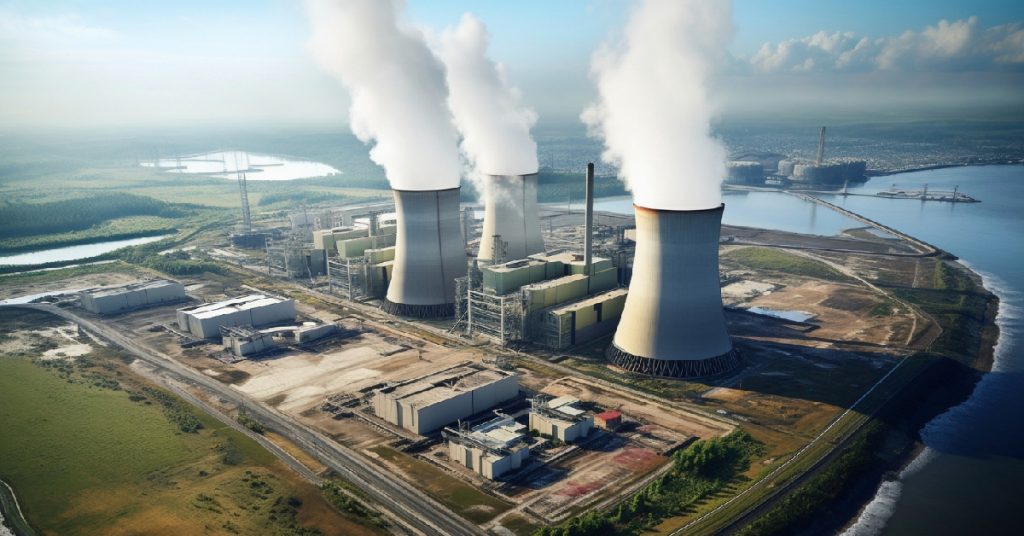
Relies on the natural convection of air for cooling. Typically used in power plants and large industrial setups, these towers require no fans—making them energy-efficient and ideal for continuous, large-scale operations.
Key Benefits:
- Low operational energy consumption
- Minimal mechanical maintenance
- Suitable for high-volume heat rejection
2. Mechanical Draft Cooling Tower
Mechanical draft towers use fans to circulate air, ensuring consistent cooling regardless of weather conditions. These towers dominate industrial and commercial applications.
Subtypes:
- Induced Draft Cooling Tower: Fans at the top pull air through the fill, improving heat transfer and reducing drift.
- Forced Draft Cooling Tower: Fans at the base push air into the system, offering easy control and stable performance.
Advantages:
- Compact design for urban or space-limited areas
- Higher thermal efficiency
- Controlled air movement independent of weather
3. Crossflow and Counterflow Cooling Towers
These designs describe how air moves relative to water:
- Crossflow Towers: Air enters horizontally while water falls vertically. Easier maintenance, quieter operation, and lower pumping head.
- Counterflow Towers: Air moves upward against the falling water, providing better heat exchange but requiring higher fan power.
Both designs are part of the different types of cooling tower configurations used to balance performance and cost.
4. Closed-Circuit (Dry or Hybrid) Cooling Tower
This different type of cooling tower keeps process water in a closed loop, preventing contamination and scaling. The system uses a coil or heat exchanger, reducing water usage and chemical treatment needs.
Ideal for:
Pharmaceuticals, data centers, and electronics manufacturing industries require high-quality, clean cooling water.
Benefits:
- Lower water consumption
- Minimal fouling and corrosion
- Extended equipment life
Emerging Trends in Cooling Tower Technology
1. Smart Monitoring and IoT Integration
Real-time monitoring through sensors helps track temperature, water flow, fan speed, and water quality. Automated alerts optimize performance and prevent downtime.
2. Sustainability and Water Conservation
Modern systems recycle blowdown water and incorporate water treatment to minimize waste—critical for regions facing scarcity.
3. Hybrid and Adiabatic Cooling
Combines wet and dry cooling methods to reduce water use while maintaining thermal efficiency. Ideal for hot and humid climates like Thailand.
4. High-Efficiency Drift Eliminators and Fill Media
Advanced materials enhance heat transfer while minimizing water loss through drift, improving both environmental and operational outcomes.
Ion Exchange’s Expertise in Cooling Water Management
Ion Exchange has been at the forefront of delivering sustainable and high-performance cooling water management systems across Asia. Beyond supplying towers, we provide integrated solutions that enhance water efficiency, operational reliability, and environmental compliance.
Total Water Management for Reliance Industries Limited, Jamnagar
Speaking volumes for Ion Exchange’s capability for turnkey execution of large and complex water and waste treatment plants, Reliance Industries Limited (RIL), Jamnagar, had entrusted to us a water contract 3 3 treatment plant (13 x 388 m /h), condensate polishing unit (3 x 388 m /h ), and effluent treatment plant.
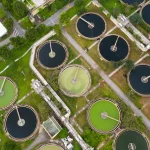
Wastewater treatment is carried out in a committed, state-of-the-art, completely automated & PLC-operated Effluent Treatment Plant (ETP). The effluent treatment area is designed to contain and treat all internal process/utility wastewater and storm/ rewater, with the objective of zero discharge from the refinery complex. The treated water is recycled back to the high total dissolved solids treatment train. Effluents are 3 isolated into four identical wastewater streams designed for a treatment capacity of 500 m /h each and maximization of reuse.
The Low Total Dissolved Solids (LTDS) stream, a mixture of process/oily water which includes non-phenolic wastewater, is tempered to an effluent quality adequate for reuse for cooling water makeup, rewater makeup up and irrigation water for expansion and preservation of the local green belt.
The High Total Dissolved Solids (HTDS) stream is a mixture of process/oily wastewater that has been in contact with process streams, such as in the crude unit desalters, and has absorbed or dissolved mineral ions such as sodium chloride. This stream also comprises (treated neutralised) process solvents such as spent caustics and phenolic wastewater. This water is treated by a downstream membrane process to an effluent quality adequate for re-use as partial makeup in seawater cooling tower and as process water.
The Oily Water Sewer (OWS) stream is a mixture of process/oily water, which includes oily condensates from various refinery units, sanitary sewage (after primary treatment), drainage from tanks, contaminated stormwater, etc. The treated OWS effluent is perfect for horticulture.
The ambit of treatment also includes three by-product streams generated during the treatment of refinery wastewater – skimmed or slop oils, oily sludge, and biological sludge. Skimmed oil is chemical and heat-treated, with recovered oils transferred back to the refinery for reprocessing. Oily sludge is thickened and then transferred back to the delayed coker unit for reprocessing. Biological sludge is thickened, stabilised, dewatered, and disposed of to landfill.
Conclusion
The evolution of different types of cooling tower systems marks a pivotal shift toward efficiency, digitalization, and sustainability. From natural draft to hybrid designs, industries now have more choices than ever to achieve thermal balance while conserving energy and water.
As industrial operations in Thailand and beyond move toward smarter, eco-friendly systems, Ion Exchange’s integrated solutions—combining engineering excellence with water treatment innovation—are helping shape the future of cooling.
Connect with Ion Exchange experts today to learn how we can help you select and optimize the right type of cooling tower for sustainable industrial efficiency.