

Hard water is one of the most common water quality issues in homes, commercial facilities, and industries. High levels of calcium and magnesium cause scale deposits, reduced equipment life, higher energy consumption, and increased maintenance costs. While traditional softening methods often involve chemical-heavy or energy-intensive processes, modern water softener resin technology offers a far more eco-friendly solution.
By applying intelligent ion-exchange principles, advanced resins efficiently convert hard water into soft water, sustainably and at much lower operational cost.
Table of Contents
ToggleWhat Is the Resin in a Water Softener?
Before understanding the environmental impact, it’s important to clarify what the resin is in a water softener.
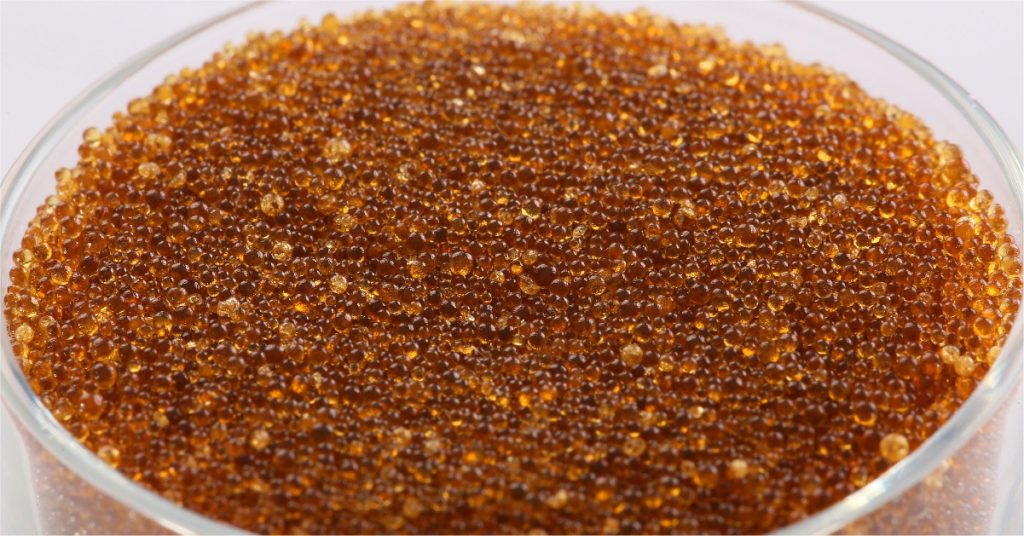
Water softener resin is a bed of tiny, porous polymer beads specially engineered to attract and capture hardness ions (calcium and magnesium). These beads hold sodium or hydrogen ions, which they exchange with hardness minerals as water flows through the resin bed.
This simple yet powerful principle makes ion exchange one of the most reliable technologies for softening water in both domestic and industrial settings.
What Is Water Softener Resin Made Of?
To answer what water softener resin is, it is typically made from cross-linked polystyrene with sulfonate functional groups. This structure gives the resin excellent durability, high exchange capacity, and long life.
Modern resins used in sustainable systems often incorporate:
- Higher cross-linking for long-term strength
- Uniform bead size for lower pressure drop
- Optimized structures for reduced chemical consumption
- Anti-fouling properties for longer resin life
These innovations make the resin water softener system more efficient and environmentally friendly.
How Water Softener Resin Supports Eco-Friendly Operation?
Using water softener resin is one of the most environmentally responsible ways to treat hard water. Here’s why:
1. Minimal Chemical Usage
Ion exchange requires far fewer chemicals compared to traditional softening methods. Regeneration uses controlled quantities of salt or brine, reducing waste and environmental load.
2. Lower Energy Consumption
Softened water lowers scale formation in boilers, heaters, washers, and cooling systems — reducing energy consumption by up to 10–15%.
3. Extended Appliance & Equipment Life
Less scale means fewer breakdowns and replacements. This reduces material waste and energy required for manufacturing and logistics.
4. Less Soap and Detergent Required
Softened water produces better foam and reduces soap usage by 30–50% — lowering chemical discharge into the environment.
5. Reduced Environmental Footprint
By minimizing regeneration frequency, optimizing brine usage, and improving resin life, modern softeners considerably reduce their environmental impact.
Eco-Friendly Resin Types Used Today
Advanced softening systems now utilize high-performance resin types, such as:
- High-capacity cation exchange resins for maximum hardness removal
- Low-fouling resins for areas with iron, organics, or turbidity
- Shallow shell resins for lower salt consumption
- Uniform particle resins for higher flow efficiency.
These innovations make resin water softener systems more sustainable than ever.
Applications Supporting Sustainable Water Conditions
Water softener resin technology supports efficient operations in:
- Homes and apartments
- Hospitals and hotels
- Food & beverage plants
- Pharmaceutical units
- Textile and laundry operations
- Boiler and cooling tower systems
- Commercial RO pretreatment
Its flexibility makes it ideal for both small-scale and industrial softening.
Ion Exchange’s Expertise in Eco-Friendly Softening
INDION ISR (Iron Specific Resin)
Developed by IEI after extensive laboratory and field studies, INDION ISR (Iron Specific Resin) is an excellent catalytic media for the removal of dissolved iron from groundwater. Its size ranges from 0.3 to 1.2 mm, making it an ideal filter medium. It produces iron-free (<0.3 ppm) water, even with water containing up to 10 ppm iron. Being a catalyst, INDION ISR is not consumed in iron removal, and this gives tremendous life to the media. It does not require chemicals for An order for a 45 m3/h iron removal filter, with our newly developed INDION iron-specific resin media, was received from Nagaland State Transport Corporation for installation at Dimapur bus terminal. Regeneration; only periodic backwashing is needed to remove the precipitated iron, and the media can be easily backwashed due to their low density.
Our iron removal process using this INDION ISR can be used for domestic as well as industrial purposes, including as pretreatment to reverse osmosis systems. A very user-friendly and completely self-contained solution, it is ideal for rural areas; it can be used in either gravity flow or pressurised water treatment systems with a varied temperature range. It overcomes the disadvantages of current methods that require sizeable space, multi-stage treatment, large quantities of chemicals, electricity, reasonably skilled manpower, careful monitoring, and high capital outlay.
An order for a 45 m3/h iron removal filter, with our newly developed INDION iron-specific resin media, was received from Nagaland State Transport Corporation for installation at Dimapur bus terminal.
INDION Decolourisation of Cane Sugar Remelt using Ion Exchange Process
Through extensive R&D, IEI has successfully introduced and commercialised ion exchange resins Polystyrenic INDION 830S and Polyacrylic INDION 930A for decolourisation of cane sugar remelt, with economical operating cost. The resins are produced in our state-of-the-art and automated, ISO9001 certified manufacturing unit.
This effective and economical technology has a synergistic effect with pretreatment methods like phosflotation or carbonation phosfloatation and carbonation and offers economical operating cost.
The INDION ion exchange sugar refining process operates by passing the pretreated sugar melt through a combination of specially suited ion exchange resin columns. These resins have the capacity to adsorb the colour precursors. The exhausted resin bed can be effectively regenerated using a sodium chloride salt solution. Sugar juice/syrup requiring treatment has the following characteristics:
- A colouring matter content that varies according to whether the juice is factory/refinery liquor/machine syrup. The molecular weight of the colourants is usually high.
- A high concentration, in the range of 58-60 Brix, or 65 Brix maximum, a)in most cases slightly alkaline pH, b)a temperature around 80 °C.
A thorough understanding of these constraints made it possible to develop INDION 930A and 830S for colour removal. Their distinguishing features are:
- pH of the juice is not materially changed.
- High porosity required fixing high molecular weight colourants by adsorption.
- High resistance to osmotic shock is required to withstand sudden changes in concentration between the regeneration and exchange steps.
- A specially designed particle size – very fine beads, associated with the viscosity of the juice, would cause excessive head loss; very coarse beads would have less power of adsorption.
- Cleaner to handle than traditional carbon-based adsorbents and cheaper than transporting the carbon to a furnace to burn off the impurities.
Benefits: Good colour capacity, High efficiency, Good adsorption, Works at higher mechanical and osmotic pressure, hence longer life, High resistance to fouling, Simple and economical.
Conclusion
Eco-friendly softening begins with advanced water softener resin technology. By enabling efficient ion exchange, reducing chemical usage, cutting energy consumption, and extending equipment life, modern resins make softening both sustainable and cost-effective.
Whether the goal is environmental compliance, reduced operational cost, or long-term system reliability, resin-based softening remains one of the most efficient solutions available today.
Connect with Ion Exchange experts today to explore the best resin water softener solutions that deliver long-term performance, sustainability, and clear water quality benefits.